Magic History & Personal Stories
From Nervous Beginner to Confident Performer: What Changed
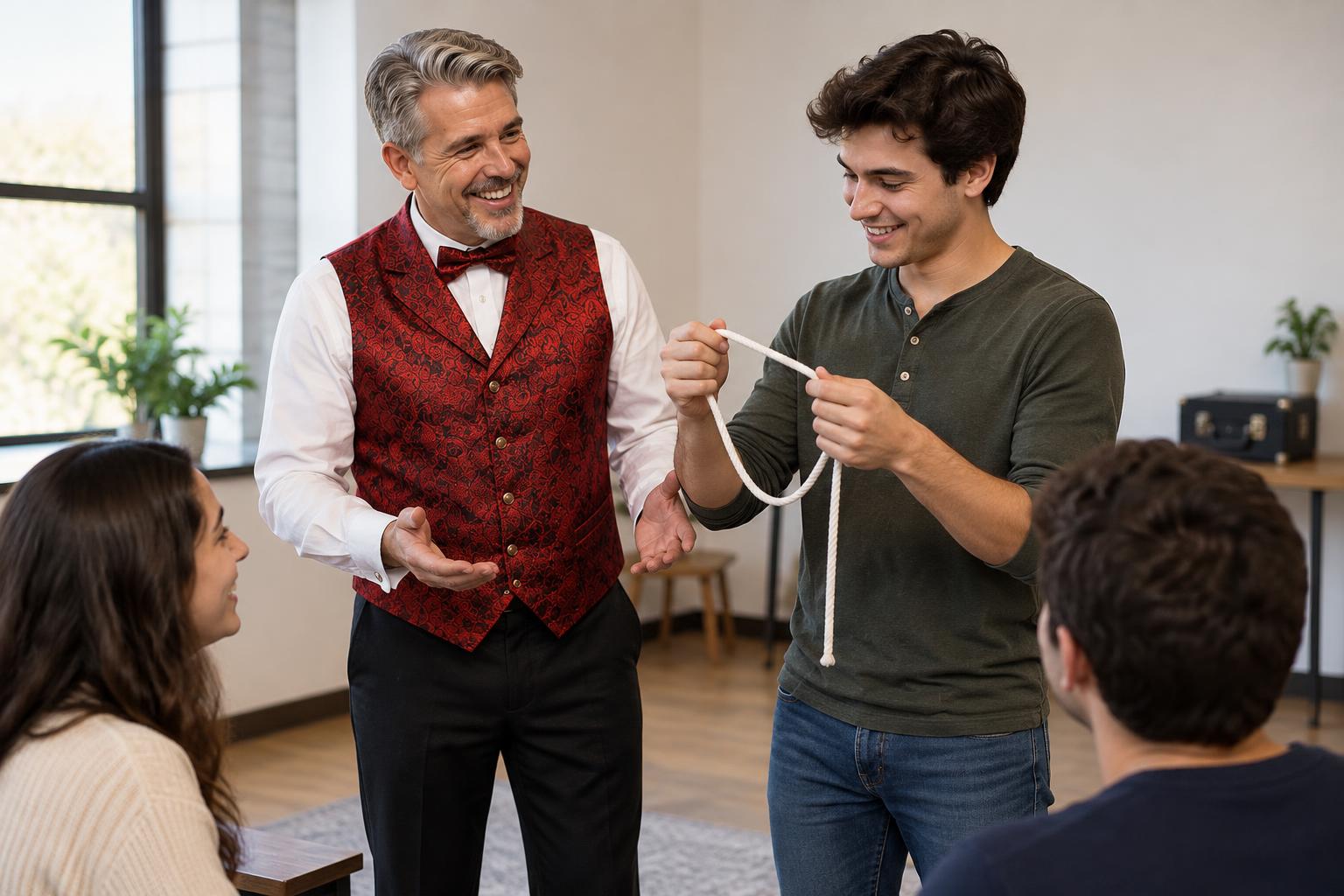
Confidence grows when preparation leaves room to pay attention to other people.
By Tres Miller · · 6 min read
Quick Answer
What helps a nervous beginner become a confident performer?
A nervous beginner becomes a more confident performer through reliable practice, full-routine rehearsal, friendly live audiences, and honest review. Confidence does not require never feeling nervous or never making a mistake. It means having a clear plan, knowing the material well enough to recover calmly, and shifting attention from self-monitoring to the spectator’s experience.
Key Takeaways
- Familiarity with a trick is not the same as readiness to perform it.
- Rehearse the words, props, transitions, and ending together.
- Start with supportive audiences and manageable material.
- Use mistakes as specific practice information rather than personal verdicts.
- Confidence means being prepared enough to connect—not being flawless.
Confidence is built, not switched on
The move from nervous beginner to confident performer is not usually a single dramatic moment. It is a series of things becoming more dependable: the props, the words, the sequence, and the ability to continue when a room reacts differently than expected. My own path includes discovering magic at eight, performing paid shows around twelve, and demonstrating and teaching at MAGIZMOS from 1991 to 1998. Those facts describe a long learning path, not an overnight transformation. For a beginner today, the useful lesson is that confidence can develop through ordinary, repeatable work.
Knowing the secret is only the beginning
Understanding how an effect works can feel exciting enough to seem like mastery. Performance asks for more. Can you introduce it clearly? Can you handle the props without searching for the next step? Can the spectator understand what is changing? Can you finish cleanly and put everything away? Those are separate skills worth practicing. A routine that feels easy alone can become harder when someone asks a question or laughs at an unexpected moment. Preparing the entire experience is more useful than hoping enthusiasm will carry an unfinished presentation.
Repetition should make the whole routine familiar
Useful practice includes the visible actions and the spoken presentation. Say the words aloud. Put the props where they will actually be during a show. Practice the transition into the effect and the sentence that ends it. Repetition helps when it is accurate and attentive; repeating a confusing script makes that script more familiar without making it better. How often a beginner magician should practice discusses sustainable habits. Choose a manageable session and a clear goal so that the practice has a purpose beyond simply spending time with the props.
A small repertoire can create a stronger foundation
Adding another trick can be a pleasant distraction from rehearsing the one that is not ready. Beginners often benefit from choosing a few appropriate effects and learning them thoroughly. That leaves time to develop pacing, instructions, and audience interaction. It also makes packing and resetting easier. A small, reliable repertoire is not a lack of ambition. It is a foundation for later growth. The reasoning is in why three tricks done well beat thirty done poorly. Confidence becomes more practical when you can name exactly what you are prepared to perform.
Friendly audiences teach what rehearsal cannot
At some point, a routine needs to be presented to a person. A supportive friend or family member can help a learner experience real attention without the pressure of a major event. Ask for useful feedback: was the beginning clear, were the instructions easy, and was the ending understandable? That is more actionable than a general request to say whether you were good. Do not assume a successful informal demonstration means you are ready for every venue. Build experience gradually and keep the commitments appropriate to your preparation and support.
Mistakes need a specific response
If something goes wrong, identify what actually happened. Was a prop missing? Did a sentence confuse the spectator? Was a move rushed? Did a transition depend on something you had not practiced? A specific answer produces a specific adjustment. Calling yourself a bad magician does not. It is also sensible to think about recovery before performing: how to pause, keep the tone friendly, and move on without blaming a volunteer. A mistake can inform the next rehearsal without becoming the story of your entire ability.
Preparation reduces avoidable uncertainty
A simple prop check prevents some problems before the show begins. Know where each item belongs, whether it needs resetting, and what space the routine requires. Check that the presentation fits the audience’s age and comfort. Preparation cannot remove every surprise from a live room, but it can remove needless searching and decision-making during the effect. My first paid shows at twelve discusses the responsibility that comes with performing for a host. Confidence is easier to build when a performer can trust the basic preparation behind the presentation.
Shift attention toward the spectator
The point of becoming more comfortable is not to look impressed with yourself. It is to have enough attention left to notice the person watching. Are they following the action? Do they want to participate? Has the surprise landed? This shift makes a performance feel less like a test and more like an interaction. Private magic lessons can help learners develop that combination of material, rehearsal, and presentation. You do not have to promise yourself a perfectly fearless future. Aim for a routine you can perform clearly, respectfully, and with room to enjoy the audience.
Frequently Asked Questions
What helps a nervous beginner become a confident performer?
A nervous beginner becomes a more confident performer through reliable practice, full-routine rehearsal, friendly live audiences, and honest review. Confidence does not require never feeling nervous or never making a mistake. It means having a clear plan, knowing the material well enough to recover calmly, and shifting attention from self-monitoring to the spectator’s experience.
Does confidence mean never feeling nervous?
No. A prepared performer may still feel nerves. Confidence is the ability to use a reliable plan and remain attentive to the audience.
Should beginners rehearse their speaking?
Yes. Introductions, instructions, transitions, and endings are part of the routine and need practice alongside the handling.
Who should a beginner perform for first?
A supportive, willing audience suited to the material is a sensible first step. Keep commitments manageable and seek specific feedback.
Can private lessons help with showmanship?
Yes. Lessons can address presentation, practice habits, audience interaction, and choosing material appropriate to the learner.
About the Author
Tres Miller performs as Tres the Great, a Utah comedy magician offering clean, interactive entertainment for birthdays, company events, schools, libraries, and community celebrations. He discovered magic at eight, began paid shows around twelve, worked at MAGIZMOS in Orem from 1991 to 1998, and teaches private magic lessons. Read Tres’s biography.
Build a clear, confident presentation with guidance from Tres.
Book a Private Magic LessonCheck availability for a magic show · Call/text 435-229-9797