Why Learning Three Tricks Well Beats Learning Thirty Tricks Poorly
Depth beats breadth. A small set of polished pieces will always outperform a drawer full of unfinished tricks.
By Tres Miller · October 28, 2026 · 6 min read
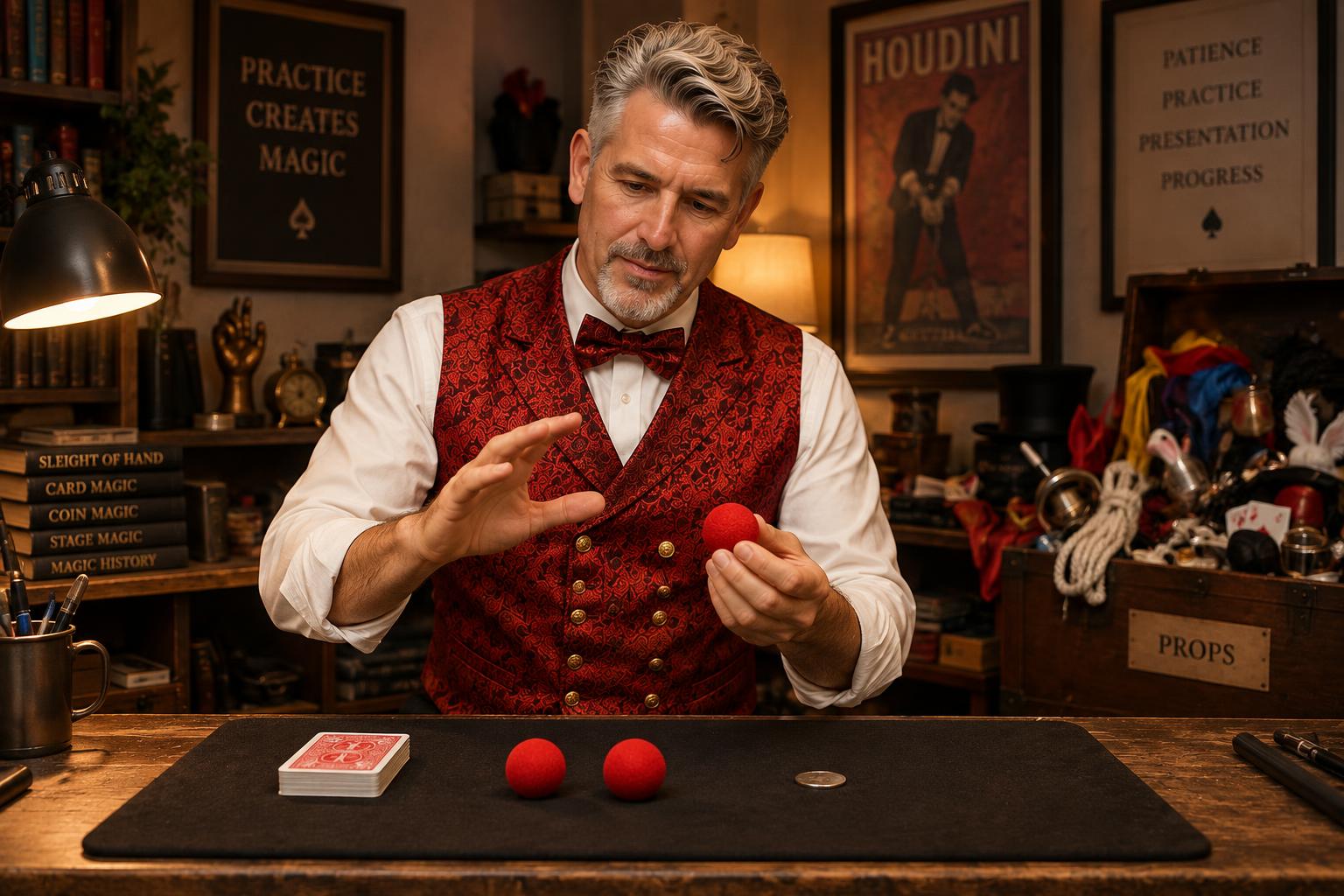
Why is mastering a few tricks better than collecting many unfinished ones?
Audiences don't count how many tricks you know — they remember how one moment made them feel. Mastering a few tricks lets you rehearse them until the handling is natural, script the words, refine the timing, and perform them for real people enough times to learn what works. That depth builds confidence and creates strong reactions. Thirty half-learned tricks usually produce nervous, hesitant performances that never land.
- Audiences remember moments, not the size of your repertoire.
- Repetition turns careful movements into natural ones.
- Scripting and timing are where a trick becomes a performance.
- Real audience feedback only comes from performing the same piece many times.
- Confidence grows from depth, not from collecting.
Working at MAGIZMOS in Orem through the 1990s, I watched a familiar pattern. A new magician would buy a trick, practice it for an afternoon, get excited about the next one, and buy that too. A year later they owned a box full of props — and couldn't confidently perform any of them. Meanwhile, the customers who picked a few tricks and stayed with them became the ones who could genuinely amaze people.
Audiences don't count tricks
No one walks away from a performance saying, "He knew a lot of tricks." They say, "My card was in his wallet!" One strong moment, performed with confidence, is worth more than a dozen shaky ones. The goal isn't to know magic — it's to create an experience.
Repetition makes it natural
The first hundred times you perform a trick, you're thinking about your hands. Somewhere after that, your hands take care of themselves and your attention moves to the audience. That shift is when magic starts to feel effortless — and it only comes from repetition. Read more in how often a beginner magician should practice.
Scripting turns a trick into a moment
A trick without words is a puzzle. With a thoughtful script, it becomes a story. Mastering a few pieces gives you time to refine what you say, where you pause, and how you build to the surprise. That's where personality and humor come through.
Before you buy your next trick, perform your current favorite for ten different people. You'll learn more from those ten performances than from any new prop.
Timing only comes from real audiences
Every audience reacts a little differently. Some laugh early, some lean in, some try to grab the deck. Performing the same piece many times teaches you how to adjust in the moment. That kind of timing — and the attention management behind misdirection — can't be learned from a stack of unfinished tricks.
Confidence is the real secret
Audiences can sense nervousness instantly. When you know a trick deeply, you can relax, enjoy the people in front of you, and handle surprises calmly. That confidence is contagious, and it makes everything you perform stronger.
A simple path to mastery
- Choose three tricks you genuinely love.
- Practice each slowly until the movements feel ordinary.
- Write and rehearse a script for each one.
- Perform them for friendly audiences again and again.
- Only then add a fourth.
Want guidance choosing and polishing your first pieces? Explore private magic lessons, read the best age to start learning magic, or learn about Tres in his bio.
Frequently Asked Questions
Why is mastering a few tricks better than collecting many unfinished ones?
Audiences don't count how many tricks you know — they remember how one moment made them feel. Mastering a few tricks lets you rehearse them until the handling is natural, script the words, refine the timing, and perform them for real people enough times to learn what works. That depth builds confidence and creates strong reactions. Thirty half-learned tricks usually produce nervous, hesitant performances that never land.
How do I know when a trick is mastered?
When you can perform it smoothly for different audiences without thinking about each step, handle unexpected reactions calmly, and focus on the people instead of your hands, it is well on its way.
Which three tricks should a beginner choose?
Pick effects you genuinely enjoy, that suit your hands and personality, and that you can perform in situations you will actually be in. Variety helps — for example, one with cards, one with coins, and one with an everyday object.
Isn't it boring to practice the same tricks?
Each trick has many layers to explore: the words, the timing, the pacing, the moment of surprise, and how different audiences respond. Mastery keeps revealing new details.
When should I add new tricks?
Add a new trick once your current ones feel natural and confident in front of real audiences. Building slowly keeps your whole set strong.
Do professional magicians perform the same tricks repeatedly?
Yes. Many professionals perform signature pieces for years, refining them with every audience. That repetition is a big part of why their performances feel effortless.
About the Author
Tres Miller performs as Tres the Great, a Utah comedy magician known for clean, interactive entertainment at company parties, schools, libraries, birthdays, and community celebrations. He began performing paid magic shows around age twelve, worked at the Orem magic shop MAGIZMOS from 1991 to 1998, and teaches private magic lessons.
Interested in learning magic? Explore private lessons with Tres.
Explore Private Lessons