How Often Should a Beginner Magician Practice?
A realistic routine built on short sessions, slow repetition, honest review, and friendly audiences.
By Tres Miller · October 24, 2026 · 6 min read
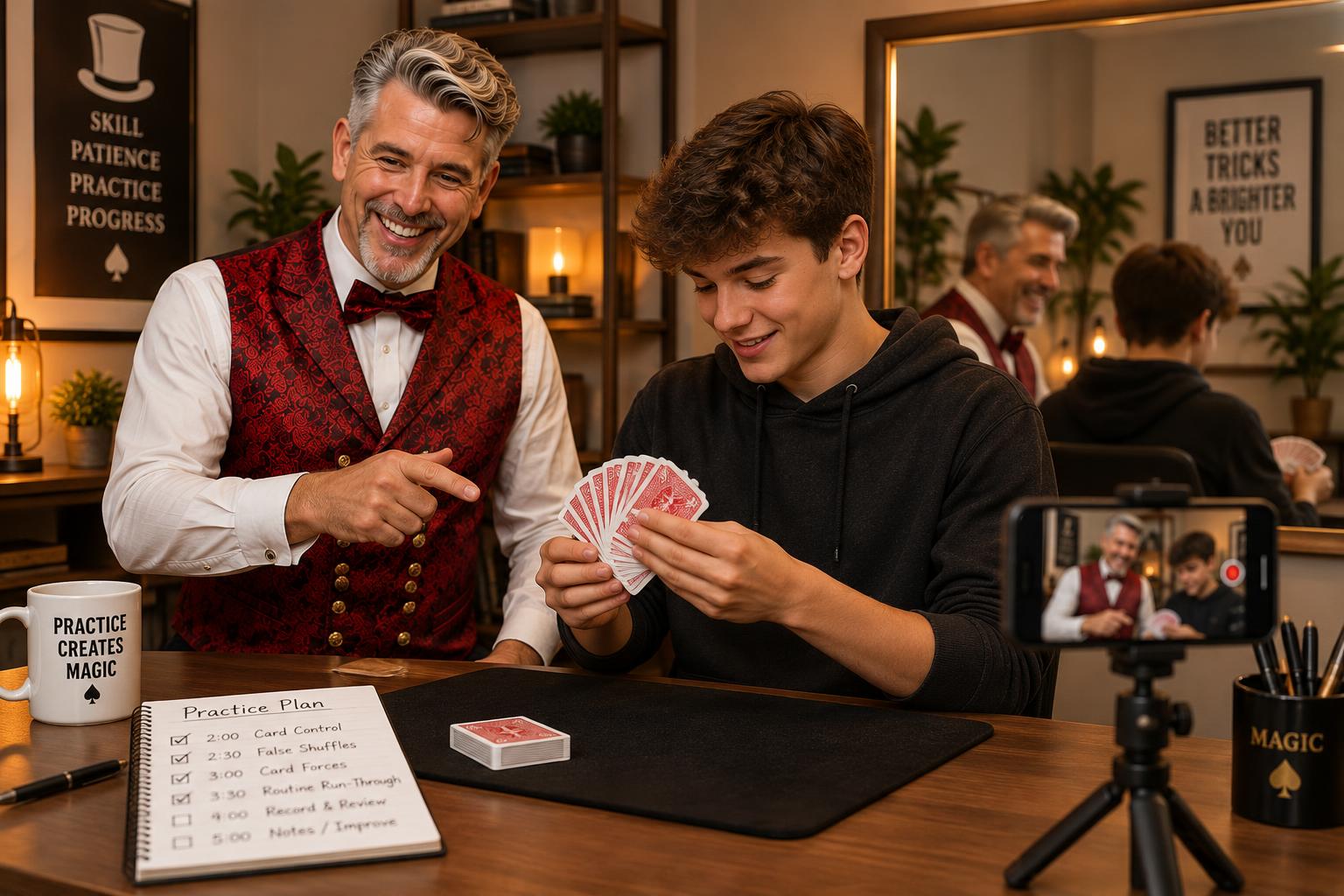
How often should a beginner practice magic to improve consistently?
Most beginners improve fastest with short, focused practice most days of the week — often ten to twenty minutes — rather than one long session. Each session should include slow, deliberate repetition, a check in a mirror or on video, a run-through of the words you will say, and, every so often, a performance for a friendly audience. Consistency matters more than total hours.
- Short sessions most days beat long sessions once a week.
- Slow, correct repetition builds natural movement.
- A mirror or phone video shows what your audience will see.
- Practice the words, not just the hands.
- Friendly audiences turn practice into performance.
During my years behind the counter at MAGIZMOS in Orem, the most common question from new magicians was some version of "How long until I'm good?" The honest answer was always the same: it depends far less on how many hours you practice and far more on how you practice and how often.
Short and frequent wins
Ten to twenty focused minutes on most days will usually take a beginner further than a two-hour session on Saturday. Your hands learn through regular repetition, and your mind stays fresh. Long sessions often turn into tired, sloppy repetition — which builds the wrong habits.
A simple daily routine
- Warm up slowly. Spend a couple of minutes handling your props slowly and smoothly so your hands feel relaxed.
- Repeat one piece deliberately. Choose one moment of one trick and repeat it slowly and correctly, focusing on natural movement.
- Check it in a mirror or on video. Watch from the audience's point of view and note anything that looks awkward or rushed.
- Say your script out loud. Practice the words with the actions so the presentation feels natural, not memorized.
- Perform for a safe audience. Every week or so, show a family member or friend and notice how they react.
Slow is smooth
Beginners often try to go fast because they think speed hides things. It rarely does. Natural, relaxed movement is what makes magic believable. Practice slowly and correctly until the motion feels ordinary, then let normal speed come on its own. I explain more in why sleight of hand takes more than fast fingers.
Film yourself, then watch it the next day. Fresh eyes catch the small tells that you cannot see in the moment.
Practice the presentation
A trick is not finished when the hands work. It is finished when you know what you will say, where you will look, and when the moment of surprise lands. Script your words, practice them aloud, and keep refining. Good timing and attention management — the craft behind misdirection — come from rehearsing the whole moment, not just the move.
Perform for safe audiences
Every week or two, show what you are working on to family or a supportive friend. Watch their faces. Where do they lean in? Where do they look away? Real reactions teach lessons a mirror cannot.
Keep a practice notebook
Write down what you worked on, what felt smooth, and what still feels awkward. A simple log keeps you consistent and shows you how far you have come — which is great motivation on slower days.
Want structure and feedback? Explore private magic lessons, read why three tricks done well beat thirty done poorly, or learn about Tres in his bio.
Frequently Asked Questions
How often should a beginner practice magic to improve consistently?
Most beginners improve fastest with short, focused practice most days of the week — often ten to twenty minutes — rather than one long session. Each session should include slow, deliberate repetition, a check in a mirror or on video, a run-through of the words you will say, and, every so often, a performance for a friendly audience. Consistency matters more than total hours.
Is it better to practice longer on weekends?
Short, regular sessions usually build skill faster than occasional long ones. Weekend sessions are fine, but they work best in addition to brief practice during the week.
Why practice in front of a mirror?
A mirror or phone video shows you what the audience sees. It helps you notice movements that look unnatural, so you can smooth them out.
Should I practice my words too?
Yes. Presentation is a large part of magic. Saying your script out loud while practicing helps the trick feel like a natural moment instead of a mechanical demonstration.
When am I ready to perform for people?
When you can perform the trick smoothly several times in a row without thinking about each step, try it for a friendly audience such as family. Their reactions will teach you a lot.
What if I get bored practicing?
Change your focus. Work on the script one day, the timing another, and filming a run-through another. Lessons with a teacher also add structure and motivation.
About the Author
Tres Miller performs as Tres the Great, a Utah comedy magician known for clean, interactive entertainment at company parties, schools, libraries, birthdays, and community celebrations. He began performing paid magic shows around age twelve, worked at the Orem magic shop MAGIZMOS from 1991 to 1998, and teaches private magic lessons.
Interested in learning magic? Explore private lessons with Tres.
Explore Private Lessons