What Is the Best Age to Start Learning Magic?
Readiness signs matter more than a birthday. Here is what to look for in a young magician — or an adult one.
By Tres Miller · October 22, 2026 · 6 min read
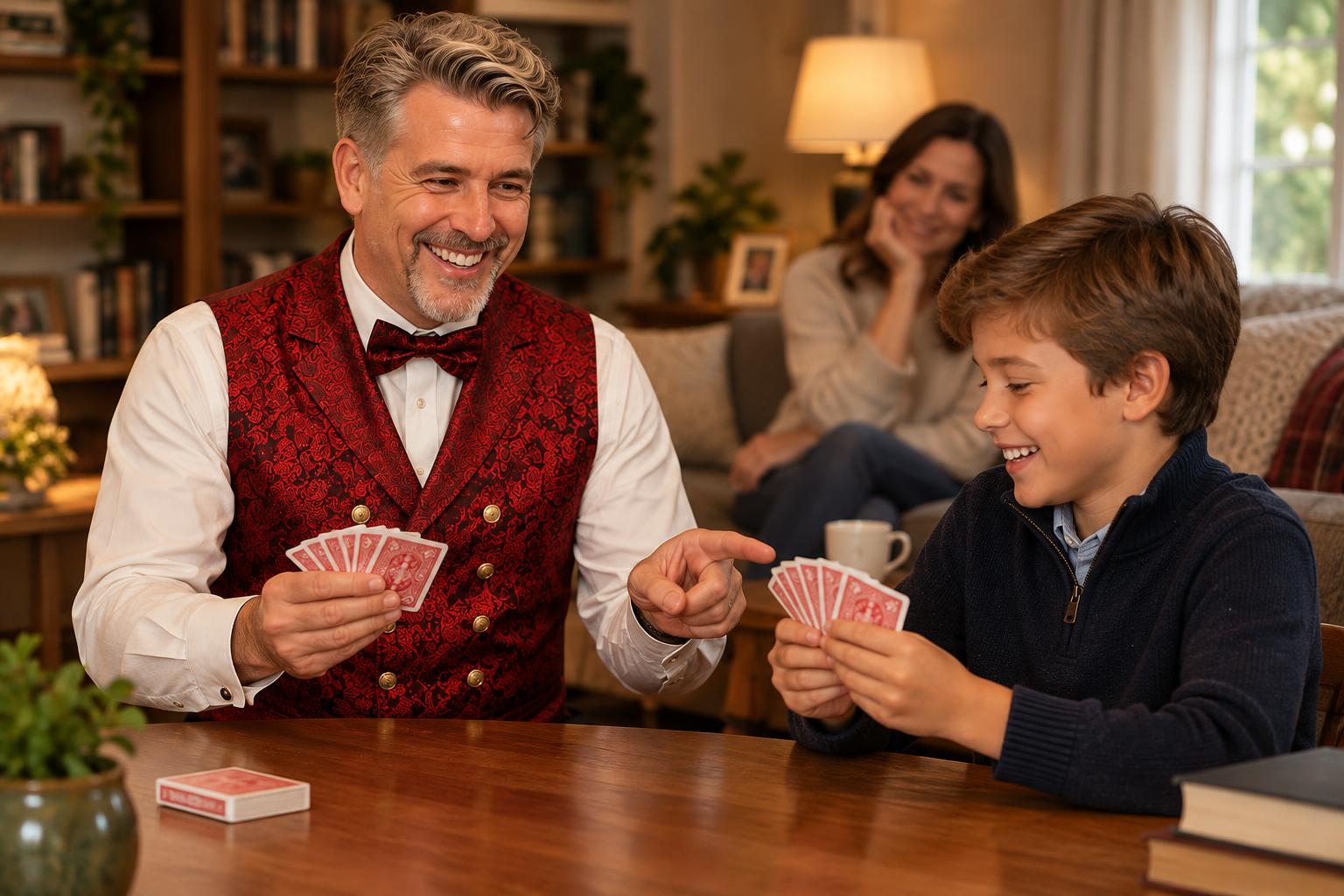
What is a good age to start learning magic?
There is no single perfect age. Many children are ready for simple, structured magic lessons somewhere around eight to ten, when they can follow multi-step directions, practice on their own for a few minutes, and keep a secret. Some younger children do well with very simple effects and a parent's help, and teens and adults can start at any time. Readiness depends more on genuine interest, patience, attention span, and support at home than on a birthday.
- Genuine interest is the strongest sign a student is ready.
- Following steps in order and practicing briefly alone matter more than age.
- Small hands are fine — material can be chosen to fit them.
- Parent support makes a big difference for younger students.
- Teens and adults can begin at any time and often progress quickly.
I started performing paid magic shows around age twelve, and I spent years at the MAGIZMOS magic shop in Orem watching kids, teens, and adults discover magic for the first time. Some of the most dedicated beginners I met were eight. Some were fifty. Age turned out to be one of the least reliable predictors of who would stick with it.
So instead of a rigid cutoff, here are the readiness signs I look for.
1. Real, self-driven interest
The student who keeps asking to see the trick again, tries to figure it out, and wants to show their family is ready. Interest drives practice, and practice drives progress. If the interest belongs mostly to the parent, it is worth waiting a little.
2. Attention span and patience
A lesson asks a student to focus, try something several times, and accept that it will not look perfect yet. Children who can stay with a puzzle, a craft, or an instrument for fifteen or twenty minutes usually handle a magic lesson well.
3. Following steps in order
Most magic effects have a sequence. A student needs to remember what happens first, second, and third. Reading ability helps with practice notes, but it is not required — younger students can learn from demonstration and repetition.
4. Hand size and motor skills
Smaller hands are not a barrier. They simply mean choosing material that fits. Some card techniques are easier with larger hands, while many effects with coins, sponge balls, ropes, and everyday objects work well for young students.
The best early sign is a child who can keep a secret. Magic only works when the method stays private — and learning that is part of the fun.
5. Willingness to practice a little, often
Progress comes from short, regular practice. A few minutes most days beats one long session a week. Read more in how often a beginner magician should practice.
6. Support at home
Younger students do best when a parent helps them remember to practice and becomes a friendly first audience. Applause at the kitchen table builds the confidence that carries into performing for friends.
What about teens and adults?
Teens often move quickly because they can practice with focus and are curious about the psychology behind a great trick. Adults bring patience and a deeper appreciation for presentation. It is never too late to begin.
More than tricks
Magic lessons build confidence, public speaking, fine motor skill, and the patience to work at something difficult. Those benefits matter more than any single trick. Learn more in private magic lessons: beyond the tricks, explore private lessons, or read Tres's bio.
Frequently Asked Questions
What is a good age to start learning magic?
There is no single perfect age. Many children are ready for simple, structured magic lessons somewhere around eight to ten, when they can follow multi-step directions, practice on their own for a few minutes, and keep a secret. Some younger children do well with very simple effects and a parent's help, and teens and adults can start at any time. Readiness depends more on genuine interest, patience, attention span, and support at home than on a birthday.
Is there a minimum age for private magic lessons?
Readiness matters more than a strict cutoff. A student should be able to sit and focus for a lesson, follow a few steps in order, and practice briefly between sessions. Ask about your child's situation when you inquire about lessons.
Does my child need to already know some tricks?
No. Lessons can start from the very beginning. A student who already knows a few tricks will simply start by polishing those before adding new material.
What materials does a beginner need?
Very little. A deck of cards, a few coins, and a small soft surface to practice on cover a lot of early learning. Expensive props are not necessary to start.
How much practice will be expected?
Short, regular practice works better than long, occasional sessions. A few minutes on most days is a realistic goal for many young students.
Is it too late to start learning magic as a teen or adult?
Not at all. Teens and adults often progress quickly because they can practice with more focus and understand presentation and audience psychology more deeply.
About the Author
Tres Miller performs as Tres the Great, a Utah comedy magician known for clean, interactive entertainment at company parties, schools, libraries, birthdays, and community celebrations. He began performing paid magic shows around age twelve, worked at the Orem magic shop MAGIZMOS from 1991 to 1998, and teaches private magic lessons.
Book a private magic lesson with Tres the Great.
Explore Private Lessons