Why Sleight of Hand Takes More Than Fast Fingers
June 22, 2026
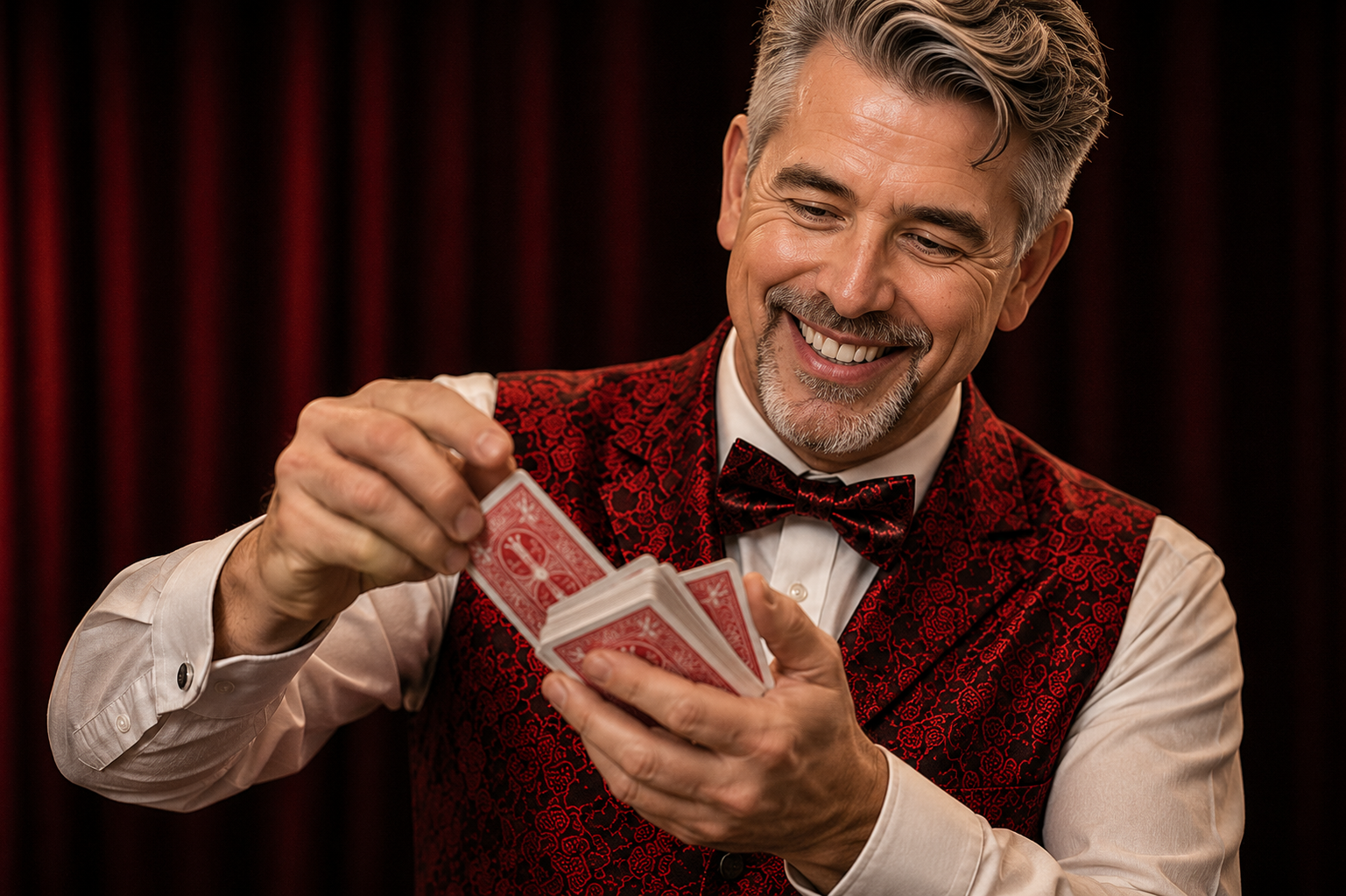
The Biggest Myth About Sleight of Hand
Ask most people what sleight of hand means, and you'll probably hear the same answer.
"Fast fingers."
Many people assume magicians fool audiences by moving so quickly that nobody can see what happened. The truth is much more interesting.
Professional sleight of hand has far less to do with speed than most people realize. In fact, some of the strongest magical moments happen when the magician is moving slowly and naturally. The real secrets involve timing, psychology, practice, audience management, and performance.
Great sleight of hand is not about hiding movement. It is about guiding attention.
Why Speed Isn't the Secret
One of the biggest surprises for people learning magic is discovering that speed often works against you. Fast movements naturally attract attention. When something suddenly moves quickly, people look directly at it. That is the opposite of what most magicians want.
The best sleight of hand often happens during ordinary actions that appear completely natural — picking up a deck of cards, adjusting an object, handing something to a volunteer. Nothing looks suspicious because nothing appears rushed.
Professional magicians spend years making difficult techniques look effortless. When the audience sees something impossible happen, they often assume it happened during the fastest moment. Many times, the secret occurred long before they realized the magic had begun.
Timing Creates the Magic
If speed is not the secret, what is? Timing.
Great magic depends on performing the right action at exactly the right moment. A laugh. A question. A moment of surprise. A volunteer's reaction. These moments naturally shift attention.
The best magicians understand how people focus, when they focus, and what they remember afterward. The timing of a move often matters more than the move itself. That is one reason two magicians can perform the same trick and receive completely different reactions. The technique may be identical. The timing may not be.
How Misdirection Really Works
Many people misunderstand the word misdirection. They imagine a magician waving one hand wildly while secretly doing something with the other. Real misdirection is much more subtle.
Good misdirection simply directs attention where it naturally wants to go. People tend to look at faces. They look where others are looking. They focus on interesting stories. They pay attention to humor. They respond to surprise.
Professional magicians use these natural tendencies to create magical experiences. The goal is not to distract people. The goal is to guide their attention in a way that feels completely natural.
The Practice Nobody Sees
A simple card trick may take years to master. A coin vanish may require thousands of repetitions. A sleight that lasts less than one second might be practiced hundreds or even thousands of times before it appears in front of an audience.
What audiences see is the finished performance. What they do not see are the hours spent practicing. Professional magicians repeat movements until they become second nature. They practice while standing, sitting, talking, and smiling. The goal is to make every action appear effortless.
When the audience sees confidence and naturalness, the magic becomes much stronger.
Performance Matters More Than Technique
Knowing a secret move does not automatically make someone entertaining. A magician could perform perfect sleight of hand and still fail to create a memorable experience.
The audience remembers how they felt. They remember laughing. They remember being surprised. They remember participating. They remember sharing the experience with friends and family.
That is why performance matters so much. The technical skills create the foundation. The presentation creates the memory. Great magic combines both.
The Tres the Great Difference
At Tres the Great Magic Shows, the goal is never simply to fool people. The goal is to create experiences people remember. Every performance is built around four principles: wonder, laughter, audience participation, and connection.
Whether performing for a birthday party, library audience, school assembly, corporate event, or holiday celebration, the focus remains the same: create wonder, create laughter, create connection.
Learning to Appreciate the Art of Magic
The next time you watch a magician perform, try looking beyond the idea of fast fingers. Notice the timing. Notice the audience reactions. Notice the storytelling. Notice how attention moves naturally throughout the performance.
The most impressive part of sleight of hand is often not the secret move itself. It is the years of practice, psychology, and performance skill that make the impossible appear effortless.
Whether you want to experience professional magic at an event or learn some of these skills yourself through private magic lessons, there is always more happening behind the scenes than meets the eye.
Local Context
Tres the Great performs and teaches magic throughout Utah County, Salt Lake County, and Davis County, including Orem, Provo, Lehi, Pleasant Grove, American Fork, Sandy, Draper, Bountiful, and Layton. Whether you're looking for a live performance, school assembly, corporate event, library program, or private magic lessons, Tres brings years of experience creating wonder, laughter, and connection through the art of magic.
Is sleight of hand just fast fingers?
No. Professional sleight of hand relies far more on timing, psychology, natural movements, and audience attention than raw speed. The best sleight often happens during the calmest, most ordinary-looking moments — long before the audience thinks the trick has even started.
Frequently Asked Questions
What is sleight of hand?
Sleight of hand is a collection of techniques used by magicians to create the appearance of impossible events through skill, timing, and audience management.
Is sleight of hand just fast fingers?
No. Professional sleight of hand relies more on timing, psychology, natural movements, and audience attention than raw speed.
How long does it take to learn sleight of hand?
Basic techniques can be learned quickly, but mastering sleight of hand often requires months or years of consistent practice.
What is misdirection in magic?
Misdirection is the art of guiding audience attention naturally so important moments occur without drawing unnecessary focus.
Can anyone learn sleight of hand?
Yes. With practice, patience, and proper instruction, most people can learn basic sleight-of-hand techniques and gradually develop more advanced skills.
About the Author
Tres Miller performs as Tres the Great, bringing family-friendly magic, clean comedy, and audience participation to audiences throughout Utah. His performances focus on creating wonder, laughter, and connection while inspiring audiences to see the world with a little more curiosity and amazement.
Ready to experience the wonder of live magic? Check availability today or learn more about private magic lessons at TresTheGreat.com.
Check Availability