Why Knowing When to End Is Part of Great Showmanship
The final minute of a show shapes how people remember all the minutes before it.
By Tres Miller · October 31, 2026 · 6 min read
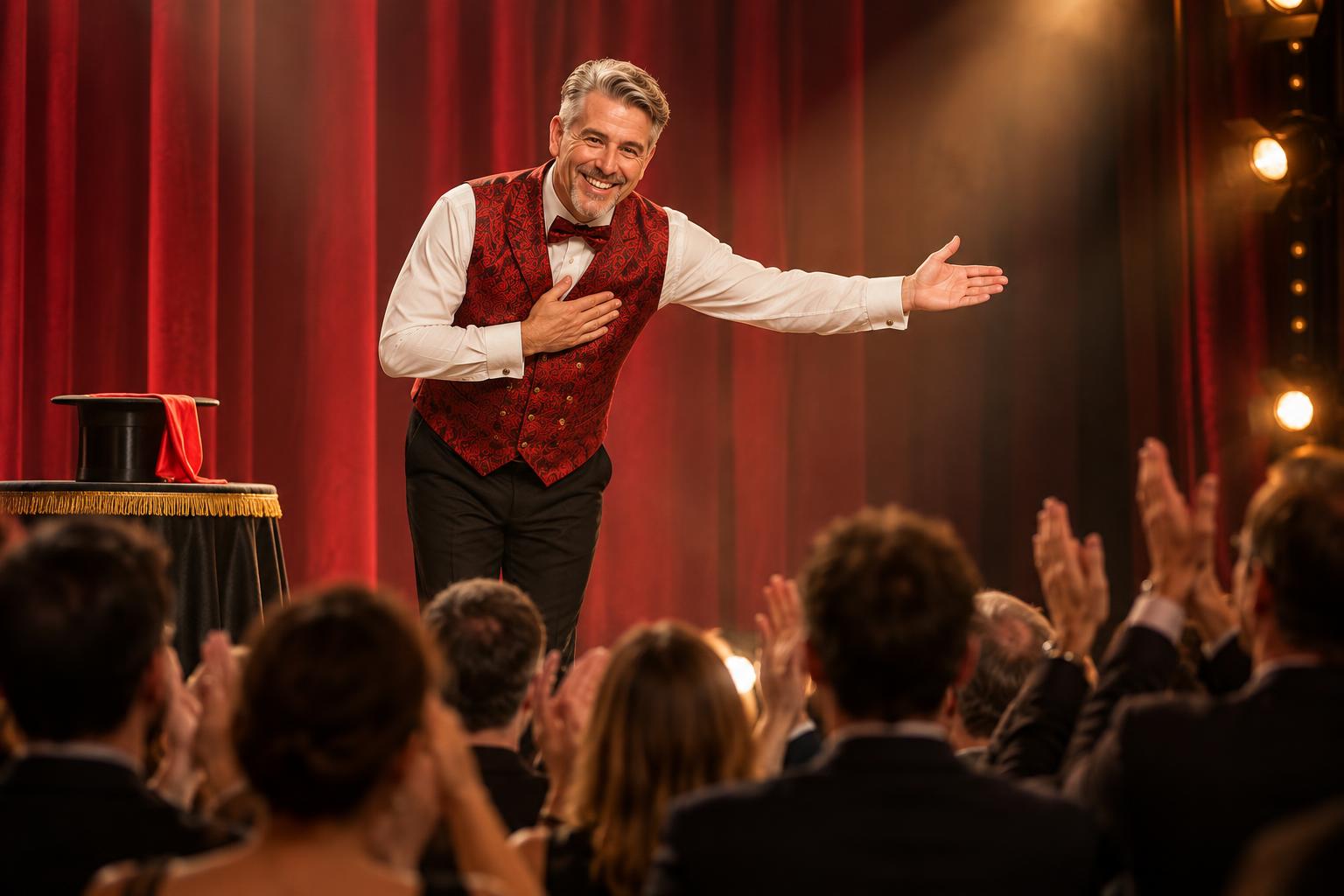
Why is knowing when to end such an important part of showmanship?
Audiences remember the peak and the ending of an experience most strongly. Ending at a high point — while energy is up and people still want more — leaves a clear, positive final memory. Running long past that point brings diminishing returns: attention drifts, kids get restless, and the event schedule suffers. Great performers plan their closer and respect the room's time.
- The ending is the last impression — and often the strongest one.
- Leave the audience wanting one more, not waiting for it to wrap up.
- Plan a strong closer instead of letting the show fizzle out.
- Respect the event schedule; hosts have cake, speeches, and dinner to get to.
- Read the room: the right length depends on the audience.
One of the most valuable things I've learned as a performer isn't a trick at all. It's knowing when to stop. A show that ends while the audience is laughing and leaning forward feels better than one that keeps going after the energy peaks — even if the longer show contains more magic.
Diminishing returns are real
Every audience has a natural attention span. Young children, a room full of guests after dinner, or a school assembly before lunch all have limits. Push past them and each new effect gets a smaller reaction than the last. More isn't better; the right amount is.
Close on a high note
I always plan my closer. It's usually the most visual, most interactive, or funniest moment of the show, placed so the applause at the end is the biggest of the day. That way the final memory is a strong one, not a slow fade.
If you're a performer, build your show backward: choose your closer first, then your opener, then fill in the middle. If you're a host, ask your entertainer how the show ends — the answer tells you a lot.
Respect the event schedule
A birthday party has cake and presents waiting. A company dinner has awards or speeches. Schools have bells. A professional fits the show into the event instead of the other way around. See when entertainment should happen at a corporate dinner for more on timing.
Read the room
Planning matters, but so does paying attention. Some audiences are ready for a longer show; others need a tighter one. Being willing to adjust is part of the job — and part of why the best trick is the one the audience remembers.
Choosing the right show length
Not sure how long your show should be? Compare show options and pricing, or watch a few performance videos to get a feel for pacing.
Frequently Asked Questions
Why is knowing when to end such an important part of showmanship?
Audiences remember the peak and the ending of an experience most strongly. Ending at a high point — while energy is up and people still want more — leaves a clear, positive final memory. Running long past that point brings diminishing returns: attention drifts, kids get restless, and the event schedule suffers. Great performers plan their closer and respect the room's time.
How long should a magic show be?
It depends on the audience and event. Younger kids generally do best with shorter shows; adult and mixed-age audiences can enjoy longer ones.
Why not just book the longest show possible?
Longer isn't always better. A show that ends at a high point leaves a stronger memory than one that runs past the audience's attention span.
What makes a good closing trick?
A strong closer is clear, visual, and often interactive, so the final applause is the biggest of the show.
Can the show fit around cake, speeches, or awards?
Yes. A professional plans the show to fit your event schedule.
How do I pick the right show length for my party?
Consider your guests' ages, the event schedule, and what else is happening. Calling to talk it through is the easiest way.
About the Author
Tres Miller performs as Tres the Great, a Utah comedy magician known for clean, interactive entertainment at company parties, schools, libraries, birthdays, and community celebrations. He discovered magic at age eight, began performing paid magic shows around age twelve, worked at the Orem magic shop MAGIZMOS from 1991 to 1998, and teaches private magic lessons.
Not sure what show length fits your event? Call 435-229-9797 for party format advice.
Call for Party Format AdviceOr check availability for a magic show · call/text 435-229-9797