Magic History & Personal Stories
How Working at MAGIZMOS Taught Me to Demonstrate Magic
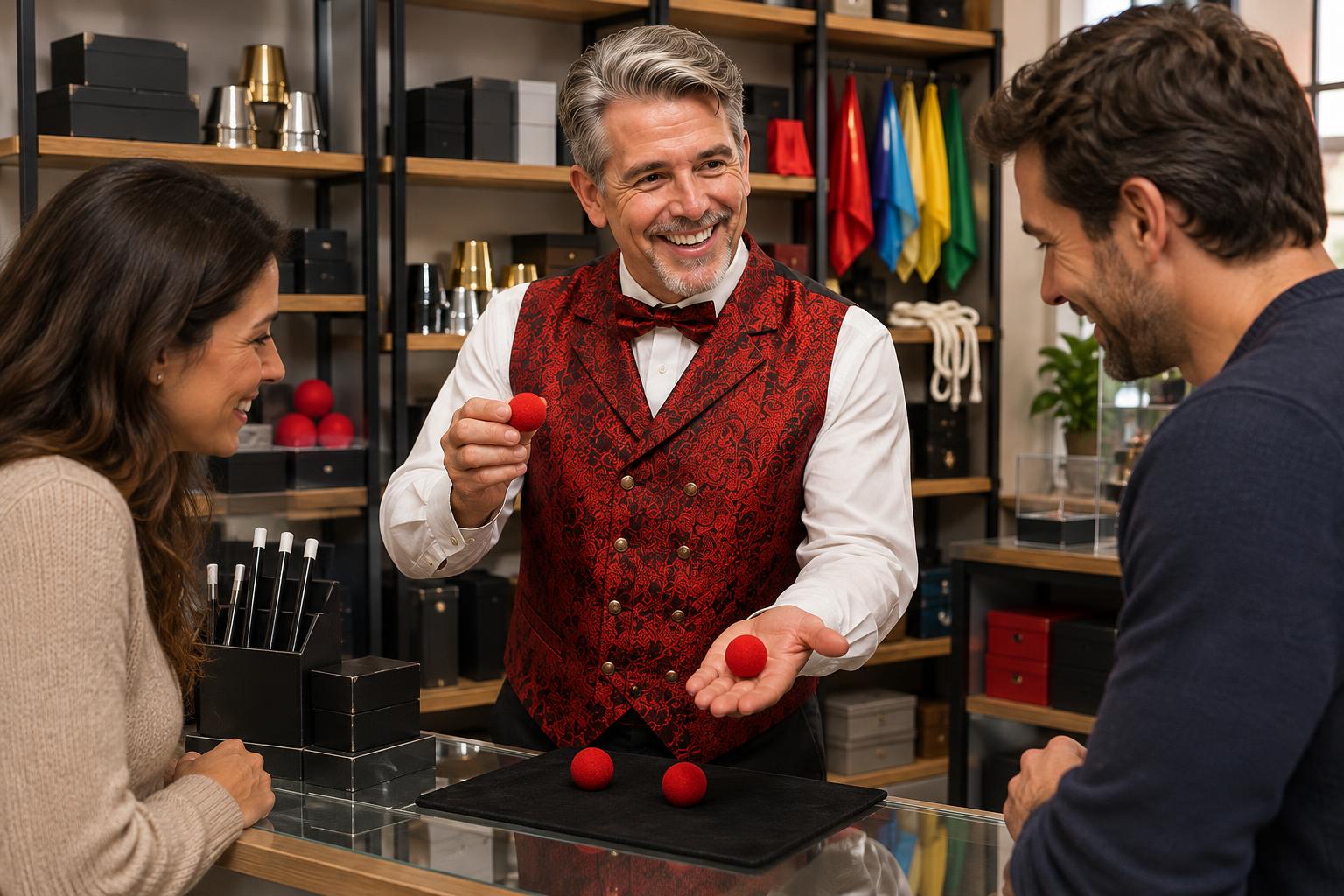
A shop counter is a small stage—and every new customer brings a new audience.
By Tres Miller · · 6 min read
Quick Answer
What did working at MAGIZMOS teach Tres about demonstrating magic?
Working at MAGIZMOS in Orem from 1991 to 1998 gave me repeated opportunities to demonstrate, sell, and teach magic. That environment sharpened the skills that make an effect understandable: clear presentation, reading reactions, leaving room for surprise, and connecting with the person watching. Demonstrating magic is not simply executing the moves; it is helping someone enjoy an impossible moment.
Key Takeaways
- Repetition should refine the audience experience, not just the mechanics.
- A clear effect gives spectators something specific to follow.
- Curiosity and skepticism are invitations to connect, not challenges to defeat.
- Good pacing leaves room for the spectator’s reaction.
- Demonstrating and teaching require different levels of explanation.
The counter was a place to learn
I worked at MAGIZMOS in Orem from 1991 to 1998, demonstrating, selling, and teaching magic. By then, magic had been part of my life since age eight, and I had been performing paid shows since around twelve. The shop added something different: regular opportunities to present magic in a close, conversational setting. A demonstration has to earn attention rather than assume it. Someone may be curious, shopping for a gift, already practicing magic, or simply watching another person’s reaction. The same effect needs a human introduction that fits the person in front of you.
Repetition reveals what the audience actually sees
Practicing alone helps a magician learn a sequence. Repeated demonstrations add another kind of feedback: whether that sequence makes sense to someone encountering it for the first time. A technically tidy routine can still feel muddled if the starting situation is unclear. The useful question is not just whether the trick worked. It is whether the spectator knew what changed and why that change was surprising. That principle is central to learning three tricks well instead of thirty poorly. Repetition becomes valuable when it improves clarity, not when it simply makes the hands faster.
Reading people starts with listening
A customer’s questions can tell you more than a prepared sales pitch. Are they looking for something to perform themselves, or do they just want to enjoy the demonstration? Are they comfortable participating? Are they following the explanation? Those questions matter outside a shop, too. At a company dinner, a library program, or a birthday party, the audience is never a single personality. I want the presentation to meet people where they are. Listening is part of showmanship because it keeps a performer from turning a conversation into a one-sided recital.
Clarity comes before cleverness
For a spectator, the visible story of a trick should be easy to describe. A ball was here and is now somewhere else. A chosen card has appeared where it should not be. A rope seems to have changed. If the presentation becomes a maze of instructions, the effect loses its strength. Clear words, visible props, and an unhurried starting point make the impossible easier to appreciate. They do not reveal how the trick works. They give the audience a fair view of what is supposed to be happening, which makes the result more satisfying.
Skepticism does not have to become a contest
Some people watch magic with a friendly determination to figure it out. That curiosity is part of the fun, especially in close-up demonstrations. The performer does not need to shame the spectator or announce a victory over them. A pleasant surprise is a better outcome than an argument about who is cleverer. My broader approach is explained in fooling people versus entertaining people. A person who feels included can enjoy the mystery even while thinking carefully about it. Respect makes that possible.
Pacing gives a reaction somewhere to land
A shop demonstration is often compact, but compact does not mean rushed. There must be enough time to understand the situation, see the change, and react. Talking straight through a surprise can make a strong effect seem smaller. A pause lets the spectator own the moment. That lesson carries naturally into comedy magic: attention, surprise, and laughter need space. It also helps when a spectator asks a question. Answering thoughtfully is often more useful than racing toward another effect simply because it is ready.
Teaching is a different responsibility
When someone is learning magic, the goal changes. The student needs practical guidance, appropriate material, and a chance to practice presenting it. Watching a good demonstration is not the same as being ready to perform. I encourage learners to separate understanding an effect from presenting it clearly to another person. Private magic lessons can develop both the performance and the practice habits behind it. Teaching should respect magic’s methods while giving students a responsible path to learning, rather than turning a public article into an explanation of secrets.
From demonstrations to today’s shows
The useful habits from a magic-shop counter still apply to a live room: make the action clear, notice the people, respect their time, and let reactions happen. Larger venues add sound, sightlines, and audience management, but the basic job remains human. A routine should create an experience, not merely display an object. You can read more of that path in the move from magic-store demonstrations to professional shows and my biography. If you are planning an event, the best format begins with your guests and your room—not a list of tricks.
Frequently Asked Questions
What did working at MAGIZMOS teach Tres about demonstrating magic?
Working at MAGIZMOS in Orem from 1991 to 1998 gave me repeated opportunities to demonstrate, sell, and teach magic. That environment sharpened the skills that make an effect understandable: clear presentation, reading reactions, leaving room for surprise, and connecting with the person watching. Demonstrating magic is not simply executing the moves; it is helping someone enjoy an impossible moment.
When did Tres work at MAGIZMOS?
Tres worked at MAGIZMOS in Orem from 1991 to 1998, demonstrating, selling, and teaching magic.
What is the difference between demonstrating and teaching magic?
A demonstration lets someone experience the effect. Teaching gives a learner structured guidance and practice appropriate to their experience.
Does close-up magic work for company events?
It can suit mingling and table-side interaction. Guest count, room layout, meal service, and schedule determine the right format.
Can a beginner learn these presentation skills?
Yes. Start with an appropriate effect and practice explaining the visible situation clearly before presenting it to a friendly audience.
About the Author
Tres Miller performs as Tres the Great, a Utah comedy magician offering clean, interactive entertainment for birthdays, company events, schools, libraries, and community celebrations. He discovered magic at eight, began paid shows around twelve, worked at MAGIZMOS in Orem from 1991 to 1998, and teaches private magic lessons. Read Tres’s biography.
Build a clear, confident presentation with guidance from Tres.
Book a Private Magic LessonCheck availability for a magic show · Call/text 435-229-9797