What Age Is Best for a Birthday Party Magic Show?
July 8, 2026 · By Tres Miller
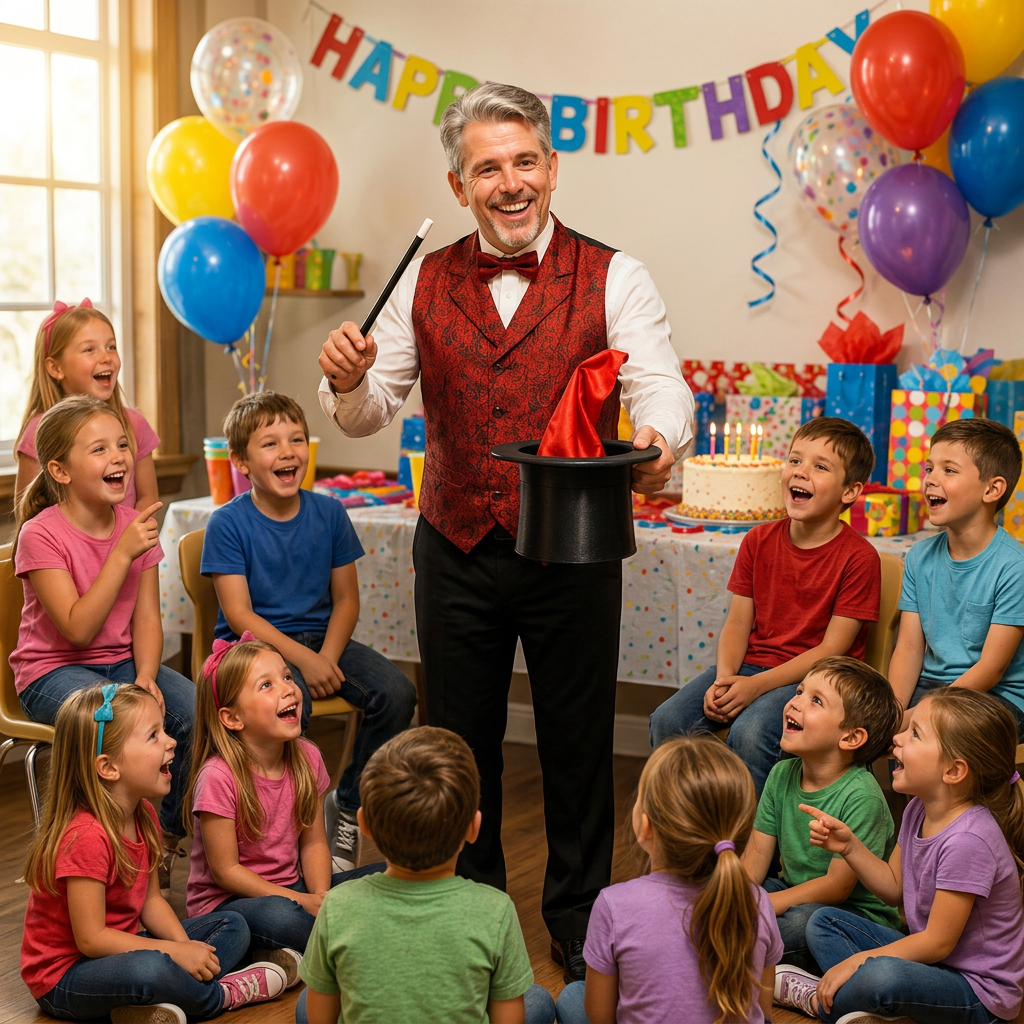
What ages are best suited for a birthday party magic show?
Almost any age. A birthday magic show can work for a child turning 8, a teenager turning 16, an adult turning 40, or a grandparent celebrating 80. The real question isn't whether someone is the right age for magic — it's what kind of magic, comedy, pacing, and audience participation will entertain this particular birthday person and their guests.
Magic Does Not Have an Age Limit
People sometimes think of birthday magicians as entertainment only for young children. I do not see it that way.
Magic works because people enjoy surprise. They enjoy laughing together. They enjoy watching something happen that they cannot immediately explain. Those reactions do not suddenly disappear when someone turns 13.
I am perfectly happy performing for someone celebrating an eighth birthday, an eighteenth birthday, a fortieth birthday, or an eightieth birthday. The material may change. The humor may change. The amount of audience participation may change. But the goal stays the same: make the birthday person and their guests laugh, participate, and experience something memorable together.
Preschoolers, Approximately Ages 3 to 5
Preschoolers can absolutely enjoy magic, but this is the age group where show length and pacing matter the most. Very young children tend to respond best to:
- Bright, visual magic
- Simple ideas
- Lots of movement
- Frequent audience participation
- Short comedy moments
- Repetition and call-and-response
They usually do not need a long, complicated presentation. For a preschool-heavy birthday party, I generally prefer a shorter performance with lots of visual moments rather than trying to hold their attention through a long show.
Preschoolers are not necessarily too young for magic. They are usually just too young for too much magic at one time.
Elementary-Age Children
Elementary-age children are often fantastic magic-show audiences. They are old enough to follow a story, understand the setup of a magic trick, and enjoy the surprise when something impossible happens.
They also tend to love:
- Helping the magician
- Saying the magic words
- Laughing at running jokes
- Watching their friends participate
- Seeing the birthday child become part of the show
This age group often enjoys a full birthday magic show with a mixture of visual magic, comedy, and audience participation.
Tweens and Teenagers
Older children and teenagers sometimes arrive with a little skepticism. That can actually make the show more fun. They may not want a performance that feels like it was designed for preschoolers, but they can still enjoy being fooled and entertained.
For older audiences, I may lean more toward:
- Stronger mystery
- Card and coin magic
- Close-up magic
- Smarter comedy
- Audience interaction that does not feel childish
- Effects that give them something to think about
The key is respecting the audience's age rather than assuming they have "outgrown" magic.
Adult Birthday Parties
Adults enjoy magic too. In fact, adults can be some of the most entertaining audiences because they often arrive thinking they are going to figure everything out. Then something happens right in front of them that they cannot explain.
Adult birthday entertainment may include:
- Comedy magic
- Close-up magic
- Strolling magic
- Stage or platform magic
- Interactive routines
- Magic performed between groups at a party
The tone changes, but the basic ingredients are the same: surprise, laughter, interaction, and shared experience. More on this: Why Adults Enjoy Magic Just As Much As Kids Do.
Milestone Birthdays and Senior Audiences
Someone celebrating a 50th, 60th, 70th, or 80th birthday can enjoy a magic show every bit as much as someone turning 10. A milestone birthday is often a gathering of family and friends across several generations, which can make magic especially useful.
Children may enjoy the visual surprises. Adults may appreciate the comedy and mystery. Grandparents may enjoy watching their children and grandchildren participate. A well-designed magic show gives everyone something to share.
Magic can be especially effective at multigenerational birthday parties because it creates one experience that the whole room can enjoy together.
Mixed-Age Birthday Parties
Many birthday parties have a wide range of ages — young children, teenagers, parents, grandparents, neighbors, and friends all in the same room. The answer is not necessarily to build the entire show only for the youngest person present. Instead, the goal should be to create a layered performance.
- Younger guests can enjoy visual magic and participation.
- Older children can enjoy stronger mystery and comedy.
- Adults can enjoy the timing, interaction, and impossibility of the magic.
A strong family show should give different generations different reasons to enjoy the same performance.
The Birthday Person Matters More Than the Number on the Cake
Age helps a magician plan, but personality and interests matter just as much. Is the birthday person outgoing? Shy? A huge magic fan? Someone who loves being the center of attention? Someone who would rather enjoy the show from their seat? Those details help shape the performance.
A good birthday show should make the guest of honor feel celebrated without making them uncomfortable.
Involving the Birthday Person
The birthday person should feel special, whether they are 8 or 80. That does not mean they have to spend the entire show onstage. Some people love participating. Others would rather enjoy one memorable featured moment. The best approach is to match the level of participation to the person.
Tell the magician ahead of time whether the birthday person loves attention, is more reserved, or falls somewhere in between.
Choosing the Right Show Length
Show length should be based more on the audience and event than on a rigid age chart. Very young preschool audiences generally benefit from shorter performances. Older children, teenagers, adults, and mixed-age groups can usually enjoy a longer show when the material and pacing fit the audience.
Other factors include:
- Party schedule
- Meal timing
- Venue
- Audience size
- Amount of interaction
- Stage magic versus strolling magic
The goal is not to perform for a certain number of minutes. The goal is to keep the audience entertained. See pricing and show options.
Common Mistakes
- Assuming magic is only for children. Adults enjoy surprise and laughter too.
- Giving preschoolers too long of a show. Very young audiences can love magic, but shorter doses usually work better.
- Talking down to tweens or teenagers. Older kids know when entertainment is aimed at much younger children.
- Using the exact same show for every audience. A kindergarten birthday and an 80th birthday should not feel identical.
- Ignoring the birthday person's personality. Age alone does not tell you whether someone wants to be a volunteer or the center of attention.
When you contact me about a birthday show, tell me three things:
- The birthday person's age.
- The general age range of the guests.
- Whether the birthday person enjoys being in the spotlight.
Those three pieces of information help me think about the pacing, humor, participation, and style of the show.
Frequently Asked Questions
What age is best for a birthday magic show?
There is no single best age. Birthday magic can work for children, teenagers, adults, and seniors. The performance should be adapted to the age, interests, and personality of the birthday person and guests.
Are preschoolers too young for a magic show?
Not necessarily. Preschoolers can enjoy magic, but they generally respond better to shorter, highly visual performances with frequent participation and simple ideas.
Do teenagers still enjoy magicians?
Yes. Teenagers often enjoy magic when the material, humor, and presentation respect their age. Strong mystery, close-up magic, cards, coins, and interactive comedy can work particularly well.
Do adults enjoy birthday magic shows?
Absolutely. Adult audiences often enjoy comedy magic, close-up magic, strolling entertainment, and interactive performances.
Can you perform for a 50th, 70th, or 80th birthday?
Yes. Magic can work very well for milestone birthdays and multigenerational celebrations.
How do you handle a mixed-age birthday party?
A mixed-age show should include layers of entertainment so younger guests enjoy the visual magic while older guests and adults enjoy the comedy, mystery, and interaction.
About the Author
Tres Miller performs as Tres the Great, Utah's family-friendly comedy magician. He began performing paid magic shows around age twelve, worked at the Orem magic shop MAGIZMOS from 1991 to 1998, and has spent much of his life performing birthday parties, school assemblies, library programs, corporate events, and community celebrations.
Whether the birthday person is turning 8, 18, 48, or 80, the goal is the same: a celebration filled with laughter, surprise, and memorable moments. Check availability or browse birthday entertainment options.
Check Availability