How Venue Layout Changes the Kind of Entertainment You Should Book
The same performer can be perfect in one room and wasted in another. Here is how to read your venue before you choose a format.
By Tres Miller · October 20, 2026 · 6 min read
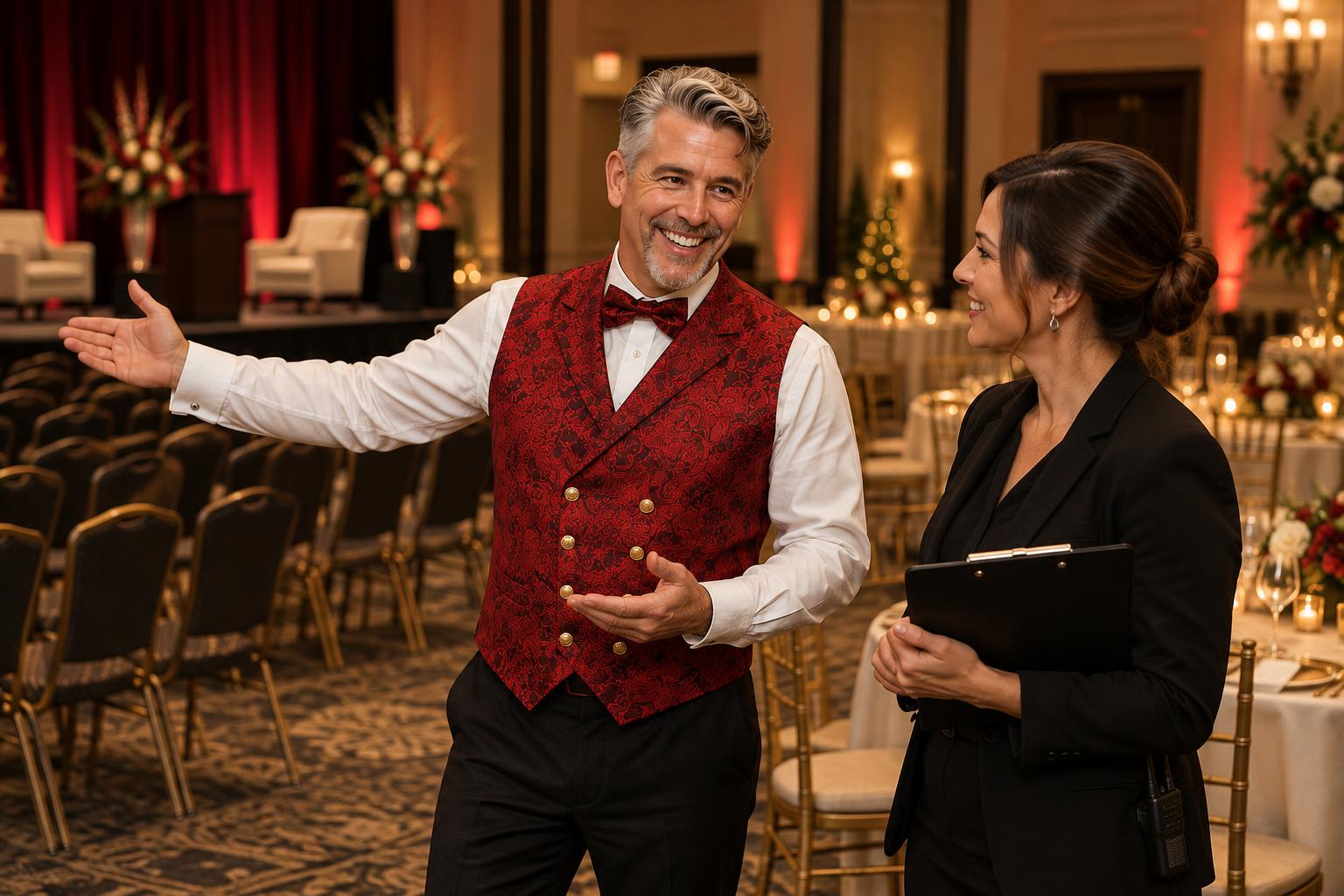
How should venue layout influence the entertainment format you choose?
Start with the room, not the act. Rows of chairs facing one direction and clear sightlines favor a featured stage show. Round tables, mingling areas, and spaces where guests move around favor strolling or close-up magic that comes to the guests. Noise, lighting, ceiling height, outdoor conditions, and accessibility all shape what will actually be seen and heard. When a venue has both a seated area and a mingling area, a combined format — strolling during arrival and a short featured show once guests are seated — often works best.
- Seated rows with clear sightlines favor a featured stage show.
- Round tables and mingling areas favor strolling or close-up magic.
- Noise, lighting, and ceiling height decide what guests can actually see and hear.
- Outdoor spaces need a plan for wind, sun, and sound.
- Many venues work best with a combination of strolling and a short featured show.
Most people choose entertainment by picturing the act. I suggest picturing the room first. Over years of performing at Utah birthday parties, schools, libraries, civic celebrations, and company events, I have learned that the venue quietly decides whether a show feels magical or merely present. A great performance that half the room cannot see is not a great performance for that room.
Sightlines: can everyone see the same spot?
A featured stage show depends on every guest looking at one area. Rows of chairs, a classroom floor, a library story-time rug, or a gym with bleachers all naturally point attention in one direction. Round banquet tables do not. At a table, half the guests are sitting with their backs to the front of the room. If your layout cannot be turned toward a single focal point, strolling or close-up magic that comes to each table usually serves the audience better.
Guest flow: are people sitting or moving?
Think about what guests will be doing during the entertainment window. During arrival, cocktails, or an open house, people are walking, talking, and finding food. Asking them to stop and sit can feel like an interruption. Strolling magic fits that flow because it meets small groups where they already are. Once guests are seated and settled, a featured show can hold the room together.
Noise and sound
Open kitchens, bars, background music, and hard surfaces make it difficult for a full room to follow a spoken show without sound support. Close-up magic handles noisy rooms well because I only need to be heard by the few people right in front of me. For a featured show in a large or loud room, confirm whether the venue has a sound system or whether the performer brings one.
Tables, ceiling height, and lighting
Low ceilings, dim lighting, pillars, and tightly packed tables all limit what a stage show can do. Bright, even lighting helps the back row see small props. If the room is set for dinner, consider how much space exists between tables for a performer to move. A quick photo or floor plan shared in advance solves most of these questions before event day.
Send your performer a phone photo of the room taken from the back corner. That one picture answers more setup questions than a long email.
Outdoor spaces
Backyards, parks, and city celebrations bring their own challenges: wind, sun in the audience's eyes, uneven ground, and sound that drifts away. For outdoor birthday parties, a shaded area with the sun behind the audience makes a real difference. Read more in indoor vs. outdoor birthday magic shows.
Accessibility
Make sure guests using wheelchairs or mobility aids have a clear view and an easy path, and that seating is not limited to the back of the room. Strolling magic can also bring the experience directly to guests who cannot easily move to a stage area.
Quick format guide by room type
| Room setup | Format that usually fits |
|---|---|
| Rows of chairs, classroom, gym, or library floor | Featured stage-style show |
| Round banquet tables | Table-to-table close-up magic |
| Cocktail or mingling area | Strolling magic |
| Backyard or park | Featured show with shade and a clear front area |
| Mixed seated and mingling areas | Strolling during arrival, short featured show later |
Tres the Great performs clean, interactive magic across Utah in all of these settings. Compare show options, review pricing, read about how much space a birthday magician needs, or check availability.
Frequently Asked Questions
How should venue layout influence the entertainment format you choose?
Start with the room, not the act. Rows of chairs facing one direction and clear sightlines favor a featured stage show. Round tables, mingling areas, and spaces where guests move around favor strolling or close-up magic that comes to the guests. Noise, lighting, ceiling height, outdoor conditions, and accessibility all shape what will actually be seen and heard. When a venue has both a seated area and a mingling area, a combined format — strolling during arrival and a short featured show once guests are seated — often works best.
Does audience size change which format works?
Yes. A featured show works well when everyone can be seated with a clear view. Strolling magic works best when guests are spread across tables or standing groups, because the performer moves to them in small groups instead of asking the whole room to focus at once.
Do I need a stage for a magic show?
Not always. A cleared performance area at the front of the room with good sightlines is often enough. A raised stage helps larger audiences in the back rows see clearly, but it is not required for most birthday parties, classrooms, or smaller corporate rooms.
What if the venue is noisy?
Loud rooms with open kitchens, bars, or music make it hard for a full room to follow a stage show without sound support. In those spaces, close-up and strolling magic often work better because the performer is only speaking to a few people at a time.
How does guest flow affect entertainment?
If guests are arriving, mingling, and moving between food and conversation, a performance that asks everyone to stop and sit can feel like an interruption. Strolling magic fits that flow naturally. Once guests are seated and settled, a featured show can hold the room's attention.
Can I combine strolling and a featured show?
Yes. Many corporate events and celebrations use strolling magic during arrival or cocktails and a short featured show after the meal. Share your schedule and room layout when you check availability so the plan matches your venue.
About the Author
Tres Miller performs as Tres the Great, a Utah comedy magician known for clean, interactive entertainment at company parties, schools, libraries, birthdays, and community celebrations. He began performing paid magic shows around age twelve, worked at the Orem magic shop MAGIZMOS from 1991 to 1998, and has spent decades developing the timing, audience care, and preparation that make live magic work in real event rooms.
Compare show options and check availability for your event.
Check Availability