Strolling Magic for Trade Shows: Does It Help Booth Engagement?
A practical look at using close-up entertainment to welcome visitors without blocking traffic or turning the booth into a sales stunt.
By Tres Miller · July 20, 2026 · 6 min read
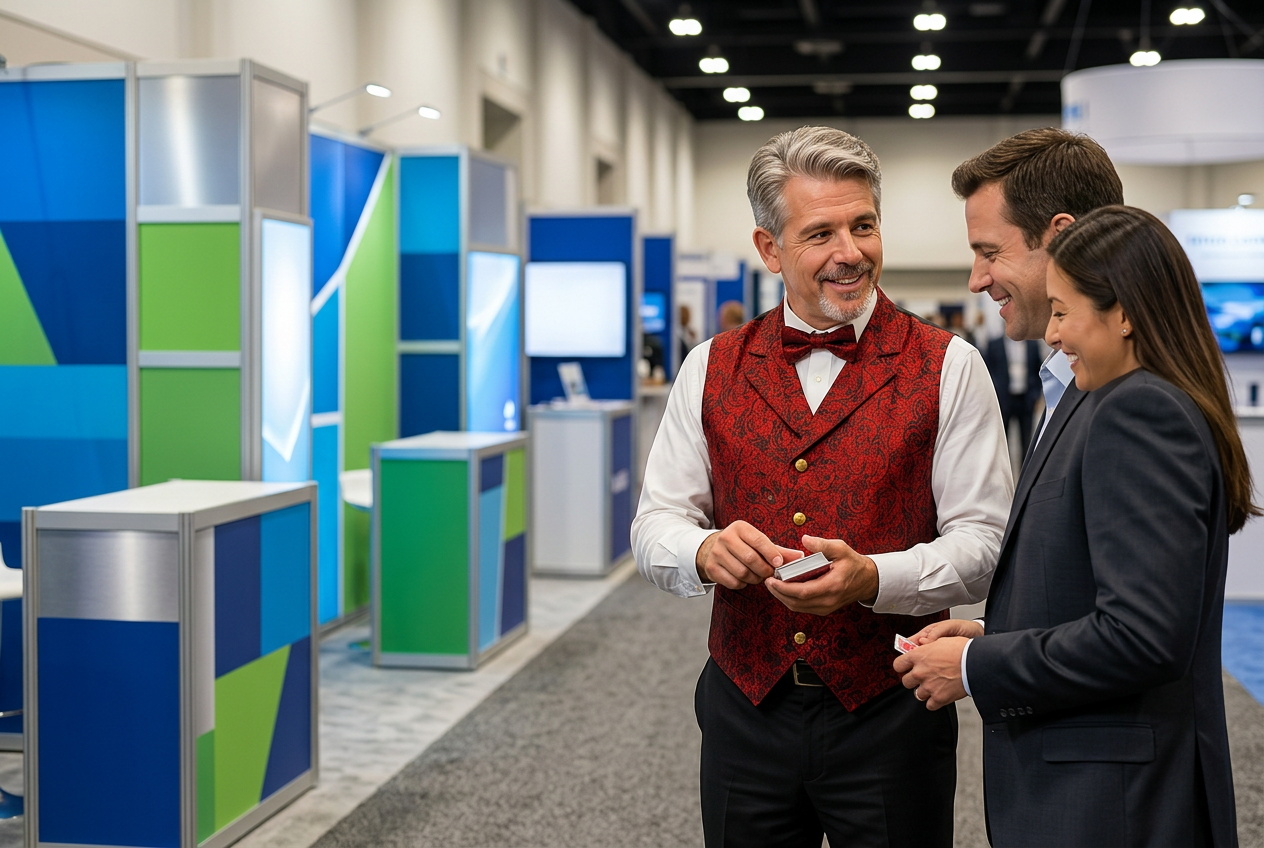
Can strolling magic help a trade show booth engage visitors?
It can support booth engagement when it is used as a conversation-friendly invitation rather than a sales stunt. A strolling magician can create a reason for nearby attendees to pause, share a short surprising moment, and begin a natural conversation with the booth team. The strongest results come from short sets, an open aisle, clear handoff to staff, and entertainment that fits the brand. Magic cannot guarantee leads, but it can help a booth feel welcoming and memorable when the experience is planned responsibly.
- Use magic to invite conversation, not to trap visitors or replace the booth team.
- Short, repeatable sets help the performer reach more groups and protect aisle flow.
- Keep entrances, accessibility routes, demonstrations, and staff conversations clear.
- Plan a natural handoff from the magical moment to the exhibitor's message.
- Measure the full experience honestly; magic can support engagement but cannot promise leads.
Trade shows are designed around attention, but attention is difficult to earn. Attendees walk past dozens of exhibits, compare competing messages, collect information, and try to decide which conversations deserve their limited time. A booth can be beautifully designed and still feel easy to ignore.
That is where live strolling magic can have a useful role. A short, well-timed performance gives people a reason to pause and share an experience. It can soften the first few seconds of an interaction and make it easier for a booth representative to begin a real conversation. The magic is not the sales pitch. It is the welcome.
What Strolling Magic Can—and Cannot—Do
Entertainment can make a space feel more inviting, create a small group around a shared moment, and give attendees something to talk about. Those are meaningful benefits for a busy exhibit floor. A visitor who has just laughed with a stranger may be more comfortable asking what a company does or accepting a short introduction from the team.
But responsible planning means keeping the promise modest. A magician cannot guarantee lead volume, qualified prospects, conversions, or sales. Trade show outcomes also depend on booth location, the offer, staff preparation, follow-up, audience fit, and the event itself. The honest goal is to support a better guest experience and create more natural openings for conversation.
The Best Place to Perform
A performer does not need to stand in the middle of the booth. In many cases, working just outside the exhibit or at the edge of the assigned space is better. It keeps the performance visible while allowing booth staff to greet visitors, demonstrate products, and continue private conversations.
- Protect the aisle: Never create a crowd that blocks the main walkway, neighboring exhibits, entrances, or accessibility routes.
- Keep the footprint small: Close-up magic needs little equipment, which makes it easier to adapt to a busy exhibit floor.
- Respect the booth boundary: Coordinate with neighboring exhibitors and follow the organizer's rules about sound, traffic, and solicitation.
- Choose the right sightline: A visible edge position helps nearby attendees understand what is happening without requiring a loud announcement.
The strongest booth interaction is a short moment that leaves room for the next conversation. Wonder should open the door, not stand in the doorway.
Design the Handoff to the Booth Team
The transition after the magic matters as much as the performance. If the entertainer keeps every visitor occupied for too long, the booth may become a show people watch without learning what the company offers. If the performer finishes with a simple opening for staff, the experience can move naturally from surprise to conversation.
Before the event, agree on a few practical signals. The booth team should know how to welcome someone who has just watched a set, which team member handles follow-up questions, and when a guest needs to be released because the aisle is getting busy. The magician should understand the brand's audience and tone without pretending to be a salesperson or making claims the company has not approved.
Keep the Sets Short and Repeatable
Trade show visitors do not all arrive at the same time, and many are moving toward a scheduled meeting. A short set is easier to join, easier to leave, and easier to repeat for the next group. The performer can create several small moments over the course of an hour instead of holding one large audience that overwhelms the booth.
Short sets also protect the event's rhythm. Attendees can enjoy the performance, ask a question, take a card or brochure if they want one, and continue through the hall. A good strolling magician reads the room and moves on when a group is engaged in a serious business conversation.
Make the Magic Fit the Brand
Brand fit does not mean turning a magic effect into a forced product demonstration. It means choosing a performer whose presence, language, humor, and professionalism are appropriate for the company and audience. A technology company may want a clean, modern tone. A healthcare organization may need especially careful audience interaction. A local business may value warmth and conversation over spectacle.
Share the intended guest experience, prohibited topics, venue expectations, and any accessibility considerations before the event. The performer can then keep the entertainment polished and inclusive while leaving the company's actual message to the people who represent it.
A Simple Planning Checklist
- Define the purpose: welcome visitors, energize a reception, encourage conversation, or add interest between demonstrations.
- Confirm the floor plan, booth location, aisle width, accessibility routes, and organizer rules.
- Choose the coverage window and agree that sets will remain short enough for normal trade show movement.
- Brief the performer on the brand tone, audience, staff roles, approved talking points, and topics to avoid.
- Create a clear handoff so visitors can speak with the booth team without feeling pressured.
- Evaluate engagement honestly using observations and follow-up quality rather than promising a fixed lead count.
Common Mistakes to Avoid
- Blocking traffic. A memorable performance is not successful if it creates a safety or accessibility problem.
- Using a long stage-style set. A trade show floor usually needs flexible close-up entertainment rather than a room-wide presentation.
- Making unsupported business promises. The performer should never imply that magic guarantees leads or sales.
- Ignoring neighboring exhibitors. Noise and crowd flow affect the entire hall, not just one booth.
- Skipping the staff briefing. Without a handoff plan, the magical moment can end without a useful conversation.
Tres the Great provides polished strolling close-up magic and corporate entertainment for Utah company events, conferences, receptions, and community gatherings. Explore corporate and strolling show options, compare strolling and stage magic, read about close-up magic for corporate events, or check availability.
Frequently Asked Questions
Can strolling magic help a trade show booth engage visitors?
It can support booth engagement when it is used as a conversation-friendly invitation rather than a sales stunt. A strolling magician can create a reason for nearby attendees to pause, share a short surprising moment, and begin a natural conversation with the booth team. The strongest results come from short sets, an open aisle, clear handoff to staff, and entertainment that fits the brand. Magic cannot guarantee leads, but it can help a booth feel welcoming and memorable when the experience is planned responsibly.
How does a magician fit into a trade show booth strategy?
Use the magician to create brief, relevant moments near the booth while the exhibit team remains available for conversations. The performer can welcome attention, then step aside so staff can continue the discussion without making the interaction feel forced.
Will strolling magic generate trade show leads?
No entertainment should promise a specific number of leads. Strolling magic may help create conversation and make a booth more approachable, but results depend on the offer, staff follow-up, audience, location, traffic, and the overall event experience.
How long should a trade show magic set last?
Short sets are usually the best fit. A memorable moment lasting a few minutes allows the performer to reach more groups, protects booth traffic, and gives staff a natural opening to continue the conversation.
Can a magician perform inside a crowded booth?
Usually, it is better to work just outside the booth or in a designated area beside it. The performer should never block aisles, entrances, accessibility routes, product demonstrations, or staff members who are speaking with prospects.
What should a trade show planner confirm before booking?
Confirm venue rules, booth dimensions, aisle requirements, noise limits, load-in access, event hours, insurance requirements if applicable, and whether the organizer permits entertainment near exhibits. Share the brand tone and desired guest experience with the performer in advance.
About the Author
Tres Miller performs as Tres the Great, a Utah comedy magician known for clean, interactive entertainment at company parties, schools, libraries, birthdays, and community celebrations. He began performing paid magic shows around age twelve, worked at the Orem magic shop MAGIZMOS from 1991 to 1998, and has spent decades developing the timing, audience care, and preparation that make live magic work in real event rooms.
Planning a trade show or corporate reception? Share the event format, location, guest flow, and preferred entertainment window.
Check Availability