How Much Corporate Entertainment Is Enough for a Company Event?
A practical guide to balancing magic, networking, meals, awards, and the attention span of a room full of busy professionals.
By Tres Miller · July 18, 2026 · 6 min read
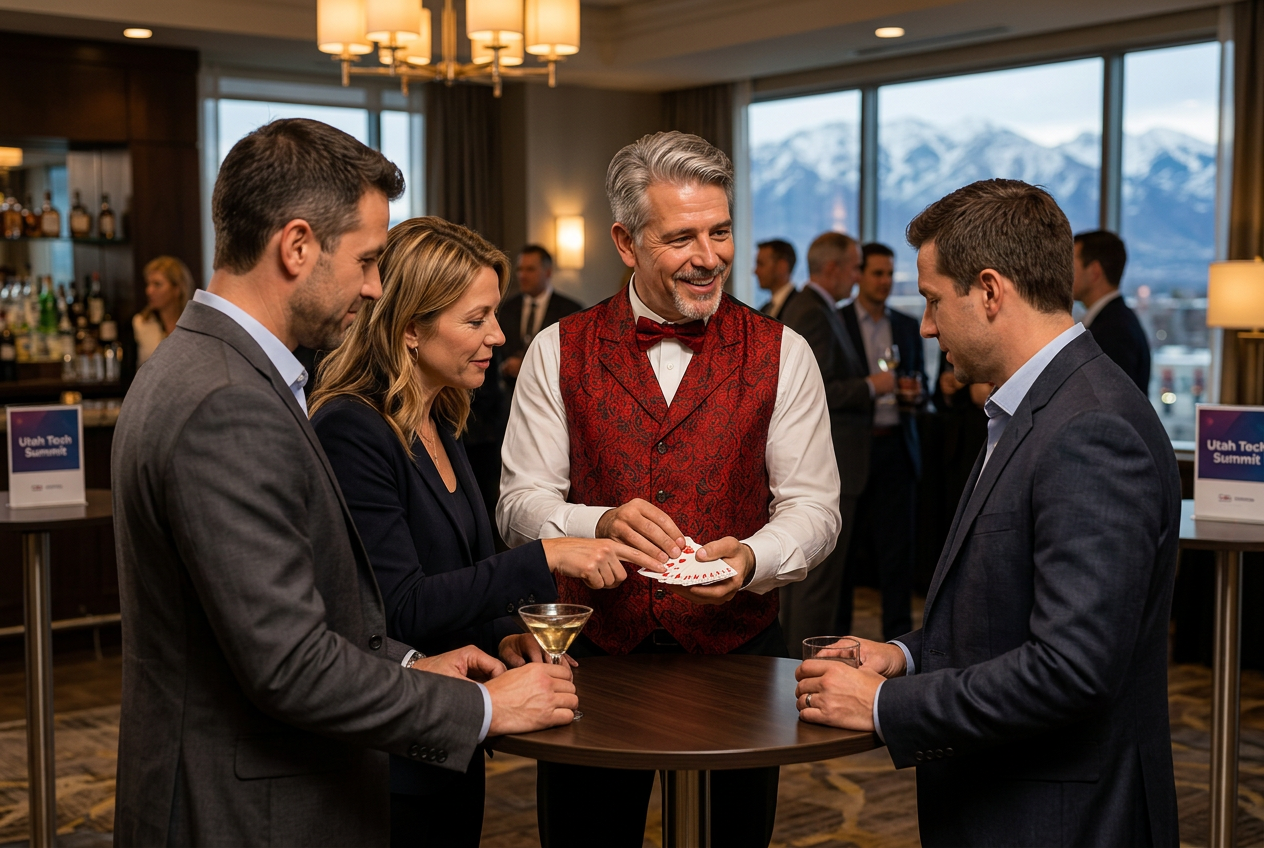
How much entertainment should a company event include?
There is no single formula, but most company events need one clear entertainment window rather than nonstop programming. Use 30–60 minutes for a featured comedy magic show, 60–120 minutes of strolling magic for a cocktail hour or networking period, or a combination of both for a longer celebration. The right amount depends on the event format, guest movement, meal timing, speeches, and whether entertainment is meant to anchor the evening or add energy between planned activities.
- Choose entertainment to support the event's purpose, not compete with it.
- Use strolling magic for movement and conversation, and a featured show for a shared room-wide moment.
- Thirty to sixty minutes is often enough for a featured corporate comedy magic show.
- One to two hours of strolling magic can cover a cocktail hour or networking window.
- Protect speeches, awards, meals, and announcements from competing audio and attention.
Corporate planners rarely need more entertainment. They need the right amount of entertainment at the right moment. A company event has a job to do: welcome people, build relationships, recognize employees, introduce a product, celebrate a milestone, or give a team an enjoyable evening together. Magic should make that job easier rather than turning the schedule into a variety show.
The best corporate entertainment plan usually has a clear beginning and end. Guests know when they are free to talk, when they should gather, and when they can return to the social part of the event. That structure makes the entertainment feel intentional without making the evening feel overproduced.
Start With the Event Format
The guest experience tells you more than the guest count alone. A 40-person executive dinner and a 400-person company celebration may both have a one-hour entertainment window, but they need very different formats.
- Cocktail hour or networking reception: Plan 60–120 minutes of strolling magic, with the performer circulating while guests arrive, get refreshments, and meet one another.
- Dinner and awards: Use magic before dinner or after formal remarks. Avoid competing with speeches, award presentations, or the meal itself.
- Conference or customer event: Strolling magic can energize a reception, while a 30–45 minute featured show can give attendees a shared break from sessions.
- Open house: Use flexible strolling coverage rather than a single start time, since guests may arrive and leave in waves.
- Holiday party: A combination of social-hour strolling and a featured comedy show can work well when the schedule has enough room for both.
Strolling Magic vs. a Featured Show
Strolling magic and stage-style magic solve different planning problems. Strolling magic keeps the event moving. The performer visits small groups, creates short shared moments, and leaves guests free to continue their conversations. It is especially useful when the room has several tables, a reception line, or an open-house flow.
A featured show gathers attention. Everyone looks in one direction, the room shares the same laughs, and the event gets a memorable centerpiece. For most company events, 30–60 minutes is enough to feel substantial without exhausting guests who have already spent the day working, traveling, or sitting through meetings.
For larger celebrations, the strongest answer may be both: strolling magic during arrival and networking, followed by a shorter featured show once the room is ready to gather. That is not doubling the entertainment for its own sake. It gives each part of the event a format that fits.
Do not ask, “How many hours of magic can we buy?” Ask, “When do we want the room to connect?” Once that moment is clear, the right format and duration become much easier to choose.
How Much Is Too Much?
Entertainment starts to feel like too much when it interrupts the very behavior the event was designed to create. If a networking reception depends on conversation, a full-room show in the first ten minutes may stop the room before connections have formed. If employees have already sat through a long awards program, another 90-minute presentation may feel like an obligation rather than a reward.
Watch for three warning signs: entertainment overlaps with important announcements, guests have no unstructured time to talk, or the event has multiple competing activities happening at once. A good performer and planner can adjust the plan, shorten the set, or move the entertainment to a better transition.
Planning the Schedule
- Write down the event's primary goal: networking, recognition, celebration, education, or customer engagement.
- Mark the non-negotiable schedule points, including meals, speeches, awards, presentations, and venue deadlines.
- Choose whether guests should keep moving or gather together during the entertainment window.
- Leave transition time before and after a featured show so guests are not rushed into their seats or out the door.
- Share the room layout, expected guest count, and sound details with the performer before the event.
Common Planning Mistakes
- Booking by hours alone. Duration matters, but format and timing matter more.
- Putting a featured show over dinner. Guests should not have to choose between eating and watching.
- Ignoring the room layout. A performer needs clear access and a plan for where guests will stand or sit.
- Trying to fill every quiet moment. Conversation is part of a successful company event, not a scheduling failure.
- Waiting until the program is final. Early coordination creates more options for timing and format.
Tres the Great provides polished corporate comedy magic, strolling close-up entertainment, and combined formats for company parties, conferences, client events, banquets, holiday celebrations, and Utah community gatherings. Explore corporate show options, compare strolling and stage magic, read about close-up magic for corporate events, or check availability.
Frequently Asked Questions
How much entertainment should a company event include?
There is no single formula, but most company events need one clear entertainment window rather than nonstop programming. Use 30–60 minutes for a featured comedy magic show, 60–120 minutes of strolling magic for a cocktail hour or networking period, or a combination of both for a longer celebration. The right amount depends on the event format, guest movement, meal timing, speeches, and whether entertainment is meant to anchor the evening or add energy between planned activities.
How long should strolling magic last at a company event?
One to two hours is a useful range for strolling magic during a cocktail hour, reception, open house, or networking period. The performer can circulate through the room without asking every guest to stop at once, and the event still has room for food, conversation, and scheduled remarks.
Is a stage magic show better than strolling magic for a corporate party?
It depends on the goal. A featured stage show works best when the host wants everyone gathered for a shared moment. Strolling magic works best when guests are arriving, networking, moving between tables, or attending an open house. Many larger events use both formats at different points in the schedule.
Can entertainment happen during dinner or awards?
Usually, entertainment should not compete with speeches, awards, or important announcements. Strolling magic can work before dinner or during a social hour, while a featured show is easier to enjoy before the meal or after formal remarks have finished.
How much setup time does corporate magic require?
A featured show generally needs a clear performance area, a small table, and time for a sound check when the venue provides amplification. Strolling magic has a lighter footprint. Confirming access, timing, parking, and the room layout in advance keeps setup from cutting into the event schedule.
When should a company book corporate entertainment?
Reach out as soon as the date and general event format are known, especially for holiday parties, conferences, and year-end celebrations. Early planning gives the performer more options for timing and format, even when the exact guest count is still being finalized.
About the Author
Tres Miller performs as Tres the Great, a Utah comedy magician known for clean, interactive entertainment at company parties, schools, libraries, birthdays, and community celebrations. He began performing paid magic shows around age twelve, worked at the Orem magic shop MAGIZMOS from 1991 to 1998, and has spent decades developing the timing, audience care, and preparation that make live magic work in real event rooms.
Planning a company event? Share your date, format, guest count, and entertainment window.
Check Availability