Elementary School vs. Middle School Magic Assemblies: What Changes?
July 12, 2026 · 5 min read
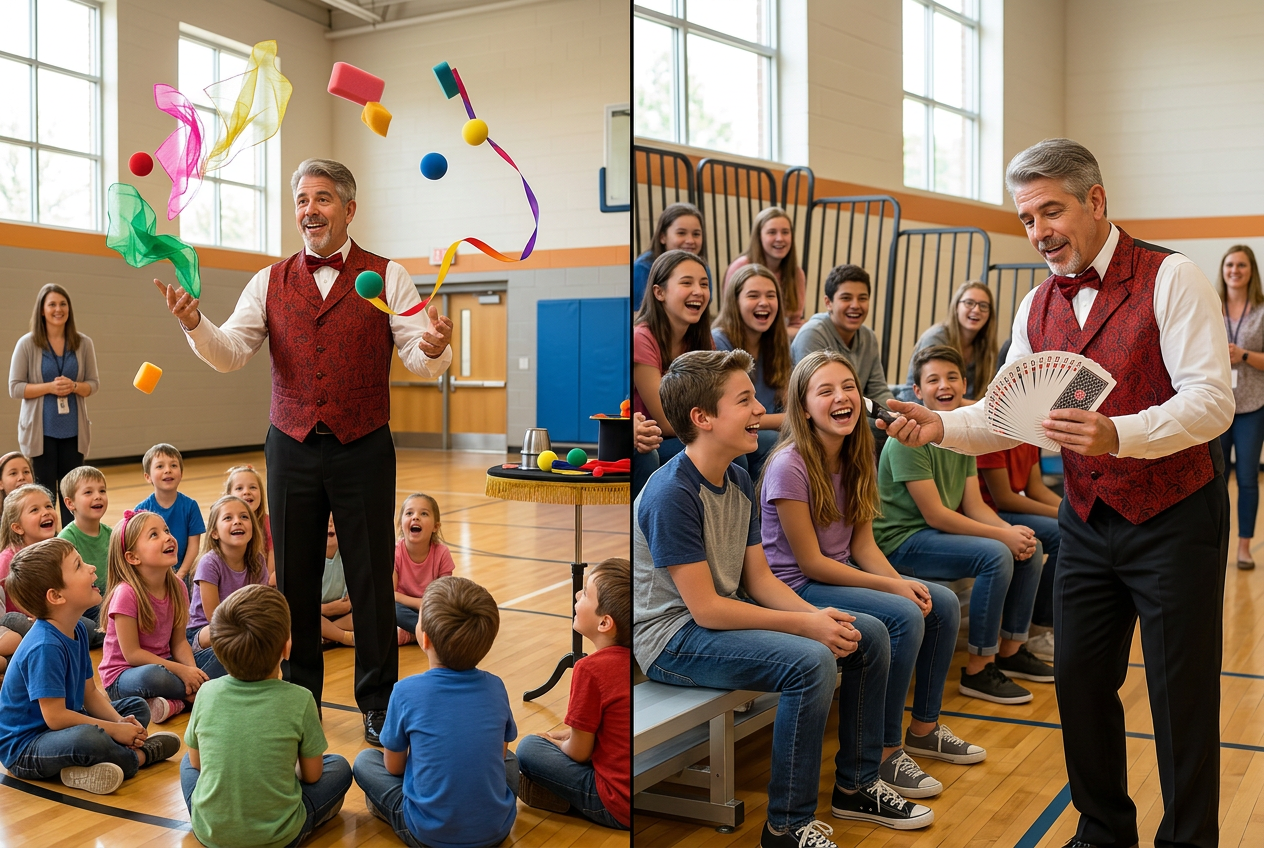
Elementary assemblies lean into big visuals, gentle humor, and lots of on-stage helpers, while middle school assemblies use faster pacing, sharper comedy, mind-reading style routines, and stronger showmanship. The magic itself doesn't change — the presentation, timing, and volunteer style do.
An experienced school assembly magician doesn't perform the same show for every audience. A kindergarten class and an eighth-grade class don't laugh at the same jokes, don't sit the same way, and don't respond to the same style of magic. The good news for Utah principals, PTAs, and assembly coordinators is that the underlying craft is the same — only the delivery changes.
Pacing: Slower, Bigger vs. Faster, Sharper
Elementary students — especially K–2 — need bigger, more visual pieces with clear beats. A silk changes color. A sponge ball vanishes and appears in a volunteer's hand. Every moment is easy to see from anywhere in the gym.
Middle schoolers can follow a longer setup and a more layered routine. Pacing tightens, transitions shrink, and the show can carry a story arc from opening to close without needing to reset every 45 seconds.
Humor: Gentle Comedy vs. Smart Comedy
Elementary humor is physical and warm. Silly voices, small "oops" moments, and playful reactions land big. Nothing sarcastic, nothing edgy, no jokes at a student's expense.
Middle school humor moves toward smart, deadpan, and a little dry. Students that age are learning to appreciate timing and wit. The magic still stays clean and respectful, but the comedy can be sharper — often at the performer's own expense rather than a student's.
Participation: Helpers vs. Partners
Elementary volunteers are helpers. They hold something, wave a wand, count to three, or shout a magic word. The energy is celebratory, and the audience roots for them.
Middle school volunteers should be treated as partners. No pranks, no embarrassment, no "gotcha." A well-run middle school moment leaves the volunteer looking clever, brave, or even a little heroic in front of peers. That single choice is the difference between a middle school assembly that lands and one that falls flat.
Effects That Work Best at Each Level
- Elementary favorites: color-changing silks, sponge ball routines, appearing objects, animal-themed magic, and big physical predictions.
- Middle school favorites: mind-reading style pieces, "impossible" predictions, card magic with a story, thought-of-drawings, and routines that feel almost like real ESP.
Culture and Setting
Elementary assemblies are usually held on the gym floor with students sitting in rows on the ground. The performer moves closer, uses wider gestures, and pulls energy up.
Middle school assemblies often use bleachers, a stage, or a cafeteria layout. The performer settles into a more theatrical posture and lets the audience come to the magic instead of chasing them.
One Thing That Stays the Same
Clean, kind, professional performance. Whether the audience is five years old or thirteen, a school assembly magician should protect every volunteer, respect every teacher, and leave the school with a shared memory rather than a manufactured spectacle. That's the throughline that makes a magic assembly worth booking at any grade level.
Common Mistakes to Avoid
- Using the exact same show for K–5 and 6–8.
- Booking a preschool-style performer for a middle school audience.
- Choosing entertainment that embarrasses middle school volunteers in front of their peers.
- Skipping a conversation about grade levels before the booking is confirmed.
- Ignoring seating, sightlines, and sound differences between the gym and the cafeteria.
Tres the Great Magic Shows provide clean, professional school assembly magic across Utah County, Salt Lake County, Davis County, and nearby communities. Explore School Assembly Magic Shows, related reading like how long a school assembly magic show should be, what principals should look for, and school assembly magic beyond tricks, or check availability.
Planning a Utah school assembly? Tell us your grade levels, date, and assembly window.
Check Availability